

Best HR Onboarding Software 2026: Top 10 Picks, Features & Buying Guide

HR onboarding software automates new-hire paperwork, tasks, and communication. It replaces messy checklists and scattered emails with one simple workflow.
- Companies with strong onboarding see 82% higher new-hire retention and 70% more productivity (SHRM).
- Automated onboarding cuts ramp-up time by 55% and boosts HR productivity by 37% (Deloitte, 2024).
- 73% of HR leaders say easy integration matters most when picking onboarding software (PwC, 2024).
- Only 12% of employees think their company onboards new hires well (Gallup, 2024).
Why Employee Onboarding Matters
Employee onboarding is the first real proof point of what a company is like to work for. When it’s disorganized, new hires disengage early. When it’s structured and personal, they stay longer and become productive faster. This makes onboarding a retention lever, not just an HR checklist.
Key Features of the Best HR Onboarding Software
A good onboarding platform does more than list tasks. It shapes how a new hire sees your company from day one. Here’s what to look for:
- Automated Workflows – Assigns tasks to HR, IT, and managers, and tracks progress automatically.
- Paperless Document Management – E-signatures and secure, centralized file storage.
- Personalized Onboarding – Adjusts the journey by role, department, or seniority.
- Communication Integrations – Connects with Teams, Slack, and Outlook for real-time updates.
- Training & Learning Modules – Self-paced courses with progress tracking.
- Analytics & Reporting – Tracks completion rates, satisfaction, and time-to-productivity.
- Compliance & Security – Encryption, access controls, and up-to-date legal forms.
Together, these features turn onboarding into a structured, secure experience instead of a scattered checklist.
Manual Onboarding vs. HR Onboarding Software
Manual onboarding might work at a handful of hires a year, but it breaks down fast at scale. Here’s how spreadsheets and email chains stack up against a dedicated platform.
Category | Manual Onboarding | HR Onboarding Software |
Document Handling | Paper-heavy, easily misplaced | Secure digital storage, e-signatures |
Communication | Scattered across email/chat | Centralized, automated notifications |
Task Management | Manual checklists | Automated triggers and status tracking |
Employee Experience | Inconsistent | Guided and personalized |
Compliance | High risk of missing documents | Built-in tracking and audit trails |
Scalability | Struggles at volume | Handles hundreds of hires easily |
Time to Complete | Weeks | Hours to days |
Dedicated HR onboarding software replaces fragmented spreadsheets and email chains with automated, centralized processes that scale effortlessly. It reduces administrative work, improves compliance, and delivers a faster, more consistent onboarding experience for every new hire.
Also read more: How to tackle Employee Onboarding Challenges
Top 10 Best HR Onboarding Software in 2025
Not every platform fits every team some prioritize compliance, others culture, others pure automation speed. Here’s how the leading options compare.
1. Employee Onboarding 365
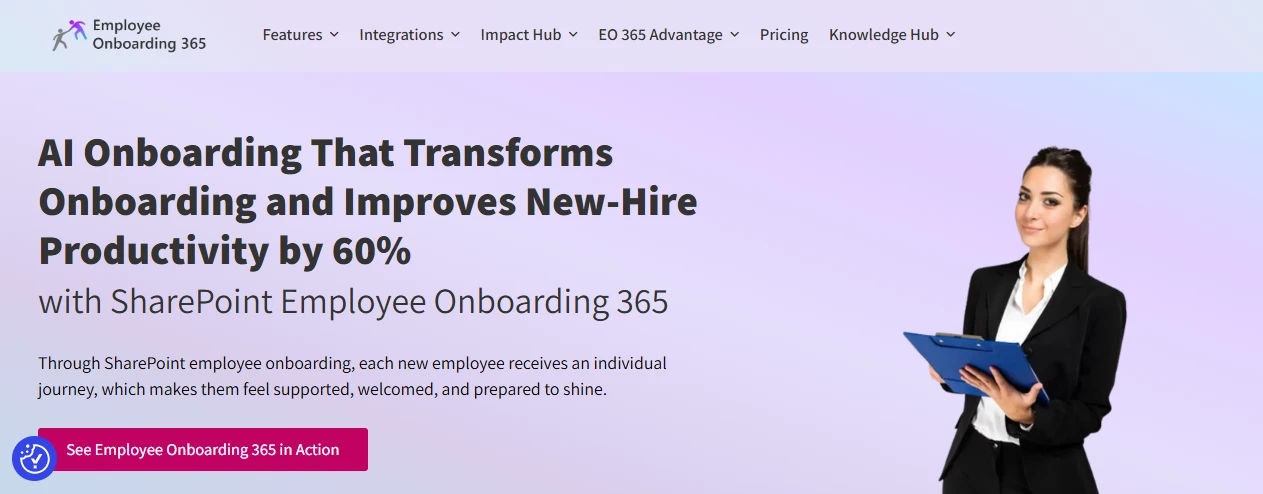
Employee Onboarding 365 is a Microsoft 365-native onboarding platform built for companies that want automation without leaving the Teams, Outlook, and SharePoint ecosystem they already use daily. It centralizes tasks, documents, and communication inside a single Microsoft-first workspace, removing the need for a separate onboarding portal. HR and IT teams can automatically assign preboarding, access, and training tasks the moment a hire is confirmed. It’s built for organizations that want onboarding automation without adding another disconnected tool to their stack.
Key features:
- Native M365 integration
- Automated task assignment
- Digital document collection
- Role-based personalization
- Real-time alerts
- Analytics dashboard
Benefits:
- Keeps onboarding inside tools employees and HR already use daily
- Cuts setup time with automated task assignment across HR and IT
- Reduces paperwork friction with digital document collection
- Adapts the onboarding journey by role for a more relevant experience
- Gives leadership visibility into progress through built-in analytics
Key Metrics
- G2 Rating: 4.9/5
- Price: Custom, based on org size
- Best for: Mid-size and enterprise businesses on Microsoft 365
2. Deel
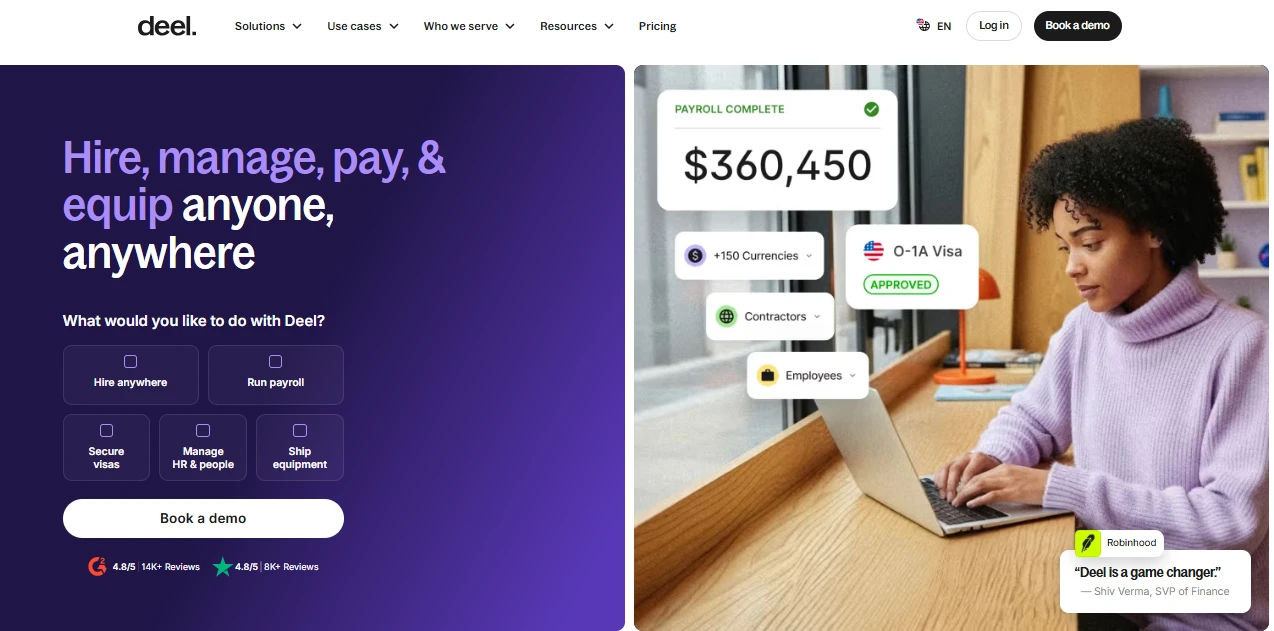
Deel is a global hiring and compliance platform. It’s built to onboard remote and international employees quickly and legally. It handles contracts, taxes, and local labor law across more than 150 countries, so you skip the legal guesswork. New hires get a guided, localized experience no matter where they’re based.
Key features:
- Global compliance management
- Automated contract generation
- Localized templates
- Country-by-country dashboards
Benefits:
- Removes legal guesswork with compliance across 150+ countries
- Speeds up hiring with automated contracts
- Feels native to each region for new hires
- Gives HR country-by-country visibility
- Skips the need for in-house legal experts everywhere
Key Metrics:
- G2 Rating: 4.8/5
- Price: From $49/contractor/month
- Best for: Companies hiring across borders
3. Rippling
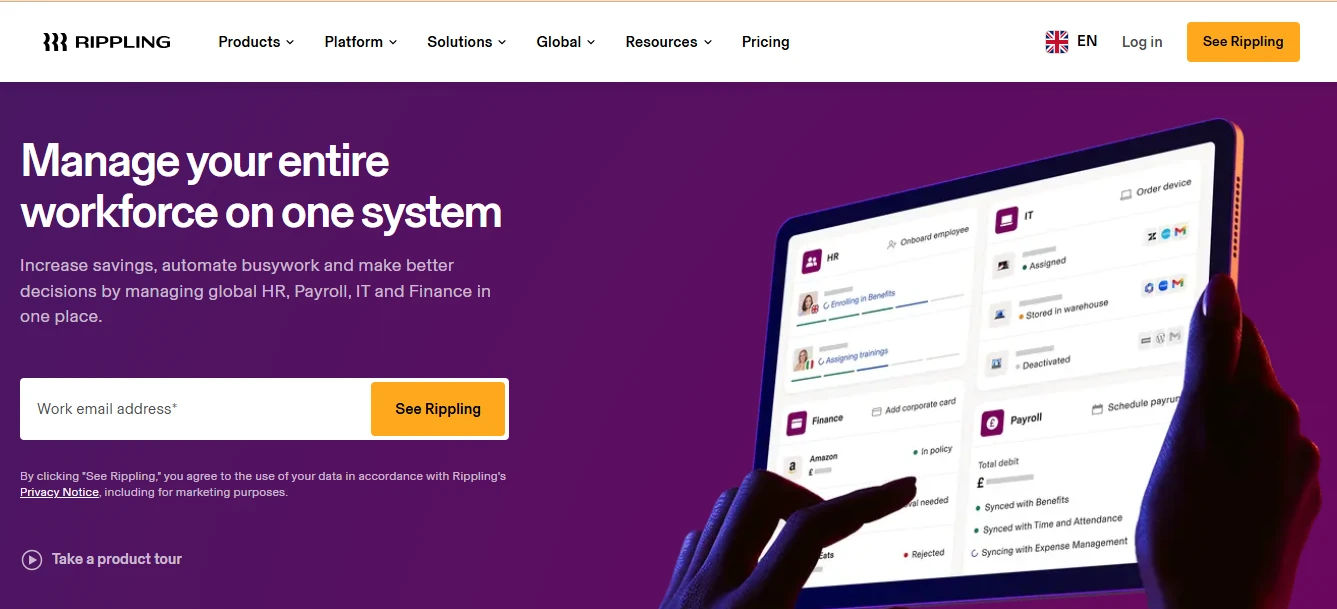
Rippling is a unified HR, IT, and finance platform. It automates onboarding down to device and software setup. New hires can get laptops, app access, and permissions ready before day one, based on their role. It syncs data across HR, payroll, and IT, so nothing gets entered twice.
Key features:
- Automated access provisioning
- Role-based setup
- HRIS/payroll integration
- Compliance checks
Benefits:
- Gets new hires device-ready before day one
- Saves admin time with one data sync across systems
- Cuts setup errors with role-based automation
- Runs compliance checks in the background
- Scales easily as you hire more people
Key Metrics:
- G2 Rating: 4.7/5
- Price: From $8/user/month
- Best for: Companies needing HR, IT, and device management in one system
4. Sapling (by Kallidus)
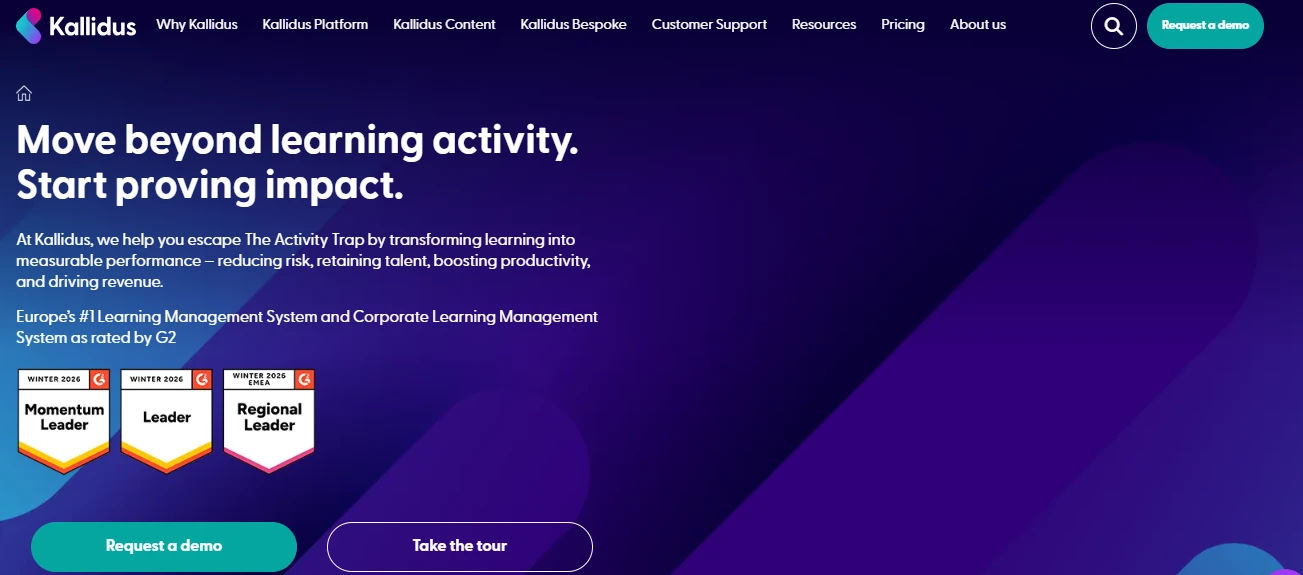
Sapling is an onboarding and people-ops platform focused on automation and analytics for growing companies. It connects onboarding data with your existing ATS, HRIS, and payroll systems, so information flows automatically. Region-specific portals help standardize onboarding across countries or offices.
Key features:
- Workflow automation
- HRIS/ATS integrations
- Region-specific portals
- Real-time dashboards
Benefits:
- Cuts duplicate data entry with system integrations
- Standardizes onboarding across regions or offices
- Gives HR real-time visibility into every hire’s status
- Reduces manual work as headcount grows
- Scales HR operations without extra overhead
Key Metrics:
- G2 Rating: 4.7/5
- Price: Custom
- Best for: Mid-sized companies expanding internationally
5. Enboarder
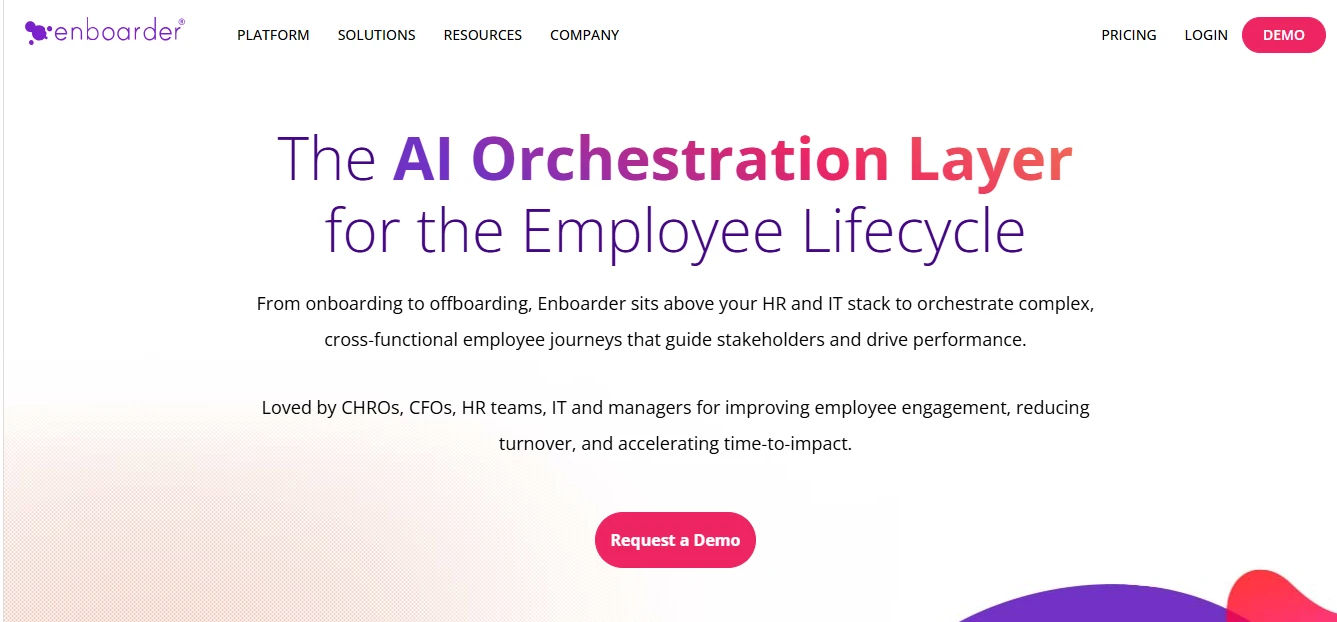
Enboarder is an experience-first onboarding platform built around personalized, journey-based engagement. Instead of static checklists, it uses a visual journey builder to trigger messages, tasks, and touchpoints based on each hire’s role and behavior. Built-in buddy and mentor matching helps new hires build relationships early.
Key features:
- Visual journey builder
- Behavior-based personalization
- Buddy and mentor matching
- ATS/HRIS triggers
Benefits:
- Turns onboarding into an experience, not a checklist
- Personalizes touchpoints by role and behavior
- Builds early relationships through mentor matching
- Triggers tasks automatically via ATS/HRIS
- Strengthens culture and engagement from day one
Key Metrics:
- G2 Rating: ~4.6/5
- Price: Custom
- Best for: Companies that treat onboarding as a culture-building moment
6. BambooHR
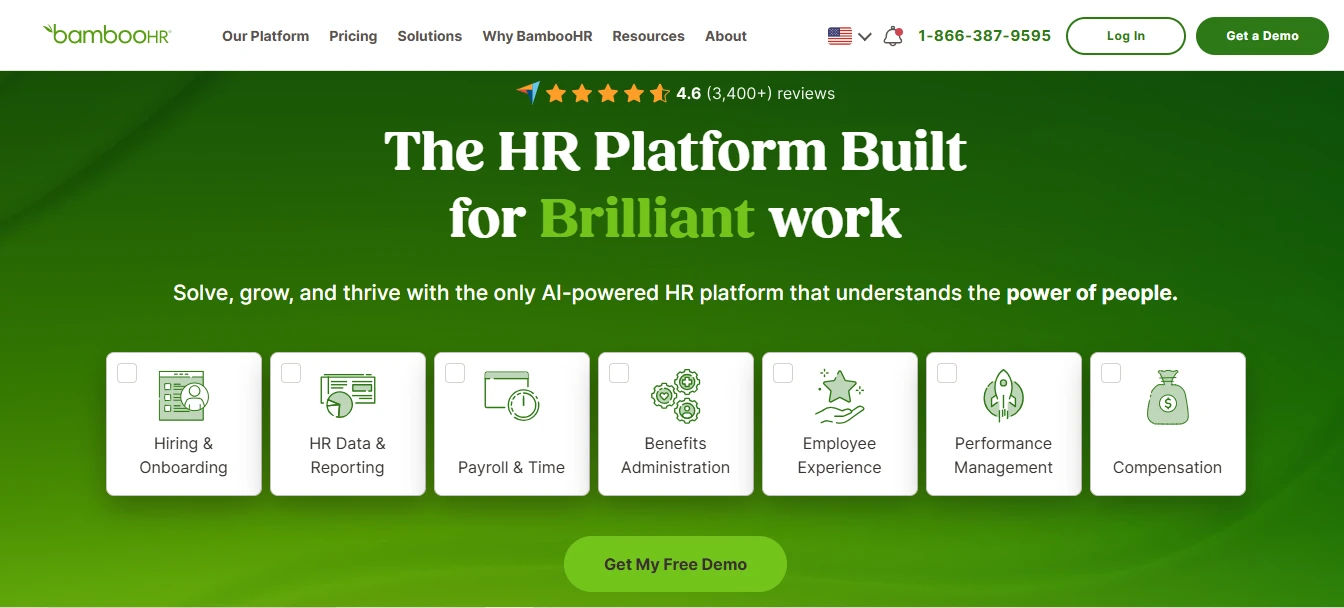
BambooHR is a well-known SMB HR platform with a simple, people-first onboarding module. It offers custom checklists, e-signatures, and preboarding portals that introduce new hires to the company before their start date. Reporting tools track completion rates and time-to-productivity without needing a dedicated analyst.
Key features:
- Custom checklists
- E-signatures
- Preboarding portals
- Reporting tools
Benefits:
- Easy to set up without a dedicated HR analyst
- Speeds up paperwork with e-signatures
- Engages new hires early through preboarding
- Tracks completion rates out of the box
- Fits smaller HR teams with a light learning curve
Key Metrics:
- G2 Rating: 4.6/5
- Price: From $8.25/user/month
- Best for: Small to mid-sized businesses
7. Click Boarding
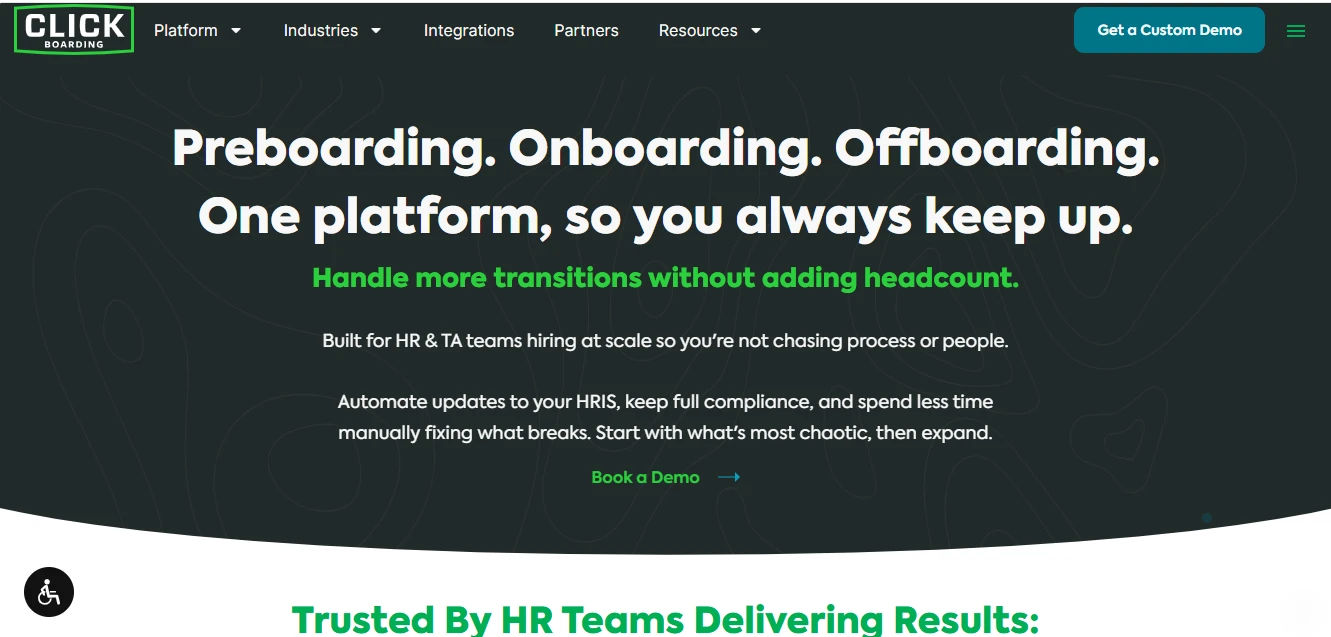
Click Boarding is a compliance-driven platform built for structured, milestone-based new-hire journeys. It walks employees through each step in order, from e-signatures to policy sign-offs, with built-in audit trails. Preboarding features keep new hires engaged before day one.
Key features:
- Step-by-step journeys
- E-forms and e-signatures
- Preboarding experience
- HRIS integrations
Benefits:
- Keeps new hires engaged with structured preboarding
- Reduces compliance risk with audit trails
- Ensures no step gets missed
- Simplifies e-signature and policy collection
- Fits regulated industries with strict paperwork needs
Key Metrics:
- G2 Rating: 4.6/5
- Price: Custom
- Best for: Mid-to-large companies with strict compliance needs
8. EddyHR
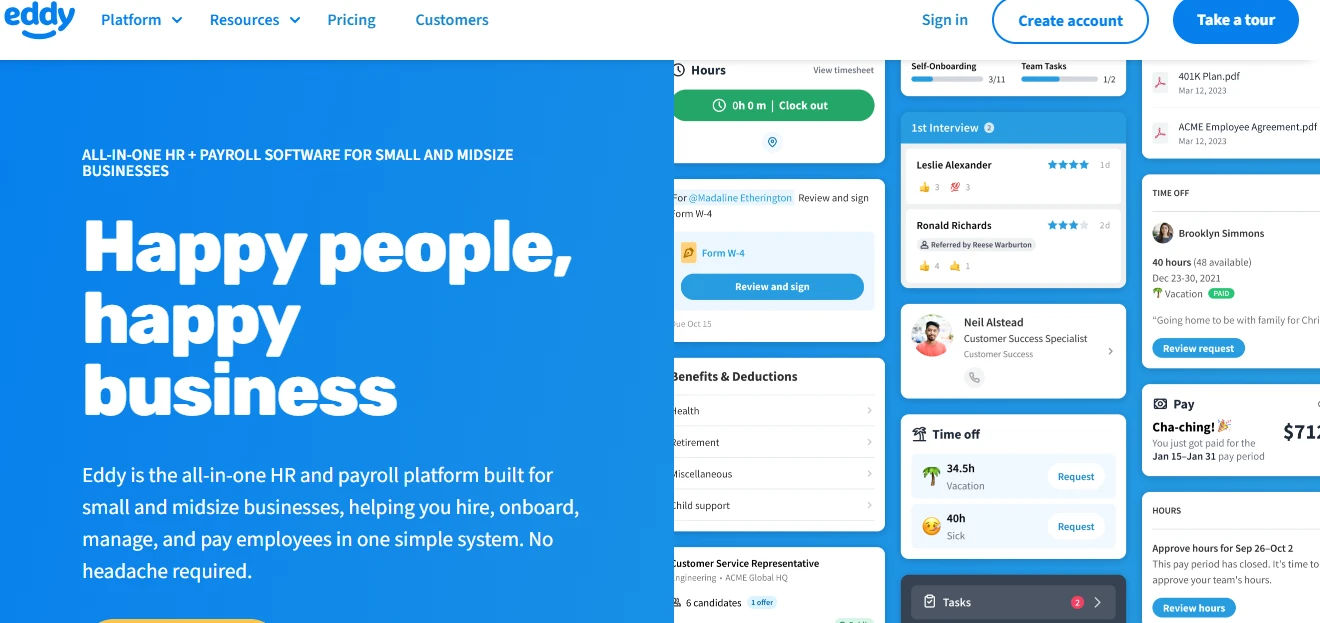
EddyHR is an affordable, all-in-one onboarding and compliance tool for small businesses. It combines automated reminders, digital document storage, and custom templates in a simple interface. Compliance tracking is built in, so HR doesn’t need a separate system to stay audit-ready.
Key features:
- Automated reminders
- Digital document management
- Customizable templates
- Compliance tracking
Benefits:
- Delivers automation at a small-budget price point
- Keeps HR audit-ready with built-in compliance tracking
- Cuts missed steps with automated reminders
- Centralizes documents in secure storage
- Simple enough for lean HR teams to run alone
Key Metrics:
- G2 Rating: 4.6/5
- Price: From $6/employee/month
- Best for: Small to mid-sized businesses wanting simple automation
9. HiBob
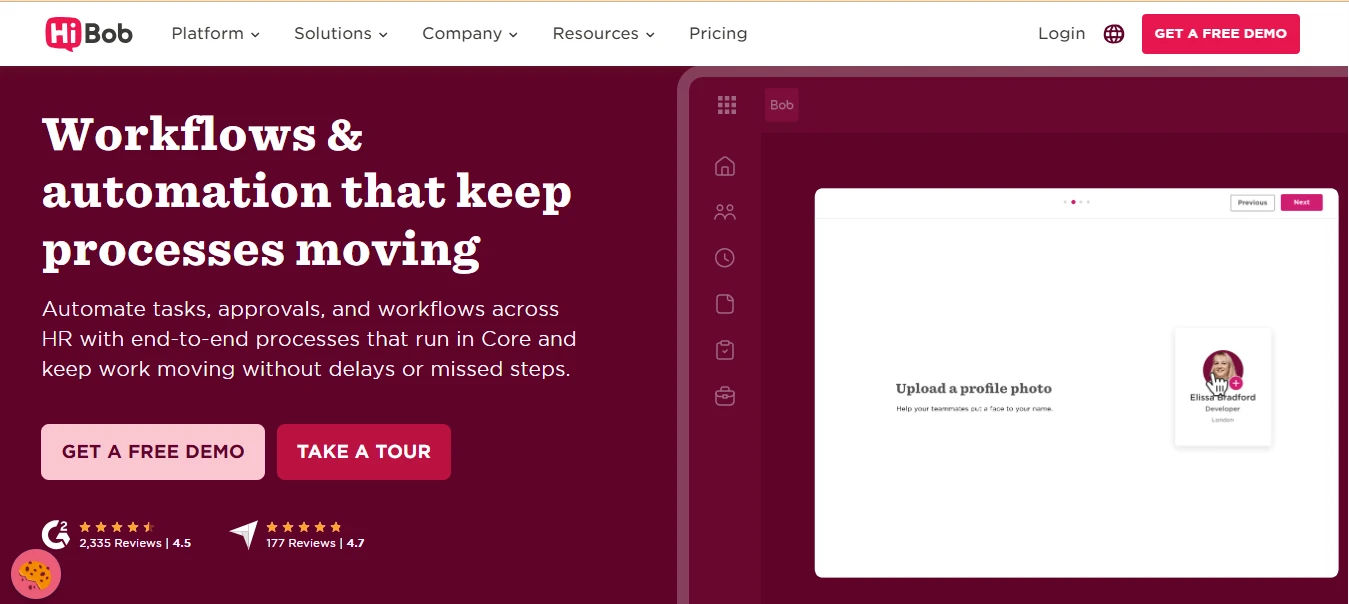
HiBob is a modern, culture-focused HR platform built for hybrid and distributed teams. Onboarding flows can be customized by role, department, or location. Preboarding modules introduce company culture before day one, and deep Slack and Teams integrations keep communication flowing.
Key features:
- Role and location-based flows
- Preboarding culture modules
- Self-service portals
- Slack/Teams integration
Benefits:
- Introduces culture before a hire’s first day
- Adapts flows by role, department, or location
- Keeps communication natural through Slack and Teams
- Gives new hires self-service access
- Built for hybrid and distributed teams
Key Metrics:
- G2 Rating: ~4.5/5
- Price: Custom
- Best for: SMBs wanting onboarding tied to culture and engagement
10. Workday
Workday is an enterprise HR suite with AI-powered onboarding built into a broader workforce management system. It supports complex, multi-department workflows and mobile access, so new hires can finish onboarding from any device. Real-time insights track engagement across large, distributed workforces.
Key features:
- Unified HR suite
- Custom multi-department workflows
- Mobile access
- International compliance support
Benefits:
- Unifies onboarding with payroll, talent, and workforce data
- Supports complex, multi-department workflows
- Lets new hires onboard from any device
- Tracks engagement and completion in real time
- Built to handle enterprise-level hiring volume
Key Metrics
- G2 Rating: 4.5/5
- Price: Custom (enterprise)
- Best for: Large organizations needing enterprise-scale HR
How to Choose the Best HR Onboarding Software
Not every tool fits every team. Picking the wrong one adds friction instead of removing it. Before you commit, check these points:
- Define your gaps – Document delays, communication breakdowns, or slow ramp-up.
- Check integration compatibility – Especially with Microsoft 365, Slack, or your current HRIS.
- Evaluate ease of use – For both HR admins and new hires.
- Prioritize customization – The tool should fit your workflow, not the other way around.
- Confirm security and compliance – Look for GDPR, SOC 2, or ISO 27001 support.
- Review analytics – Completion rates, satisfaction, and time-to-productivity should be trackable.
The Future of Employee Onboarding
Onboarding software is moving fast beyond checklists and paperwork. Here’s where it’s headed:
- AI-driven personalization tailored to each hire’s role and skills
- Predictive analytics that flag turnover risk early
- Immersive learning through VR and gamified trainin
- End-to-end automation from preboarding through offboarding
- Cultural-fit tools that match new hires to teams by working style
Conclusion
The most effective HR onboarding software transforms the onboarding process into an engaging, retaining, and productive experience. HR teams can gain time and make each new employee feel welcomed and supported on the first day with the help of automation, analytics, and personalization.
Are you willing to automate your onboarding? Request a Free Demo and get to know how our solution will enable you to streamline processes and make first impressions that last.
Join Our Creative Community
Frequently Asked Questions
What is HR onboarding software?
HR onboarding software is a digital platform that automates new-hire paperwork, task assignments, training, and compliance tracking to replace manual, paper-based onboarding.
What is the best HR onboarding software for Microsoft 365 users?
Employee Onboarding 365 is built natively for Microsoft 365, integrating directly with Teams, Outlook, and SharePoint
What is the best onboarding software for remote or global teams?
Deel is built specifically for hiring and onboarding remote and international employees in compliance with local labor laws.
How much does HR onboarding software cost?
Pricing ranges from roughly $1.50–$60 per employee per month for SMB tools, with enterprise platforms like Workday using custom pricing based on company size
Does onboarding software improve employee retention?
Yes. Structured onboarding is linked to an 82% increase in new-hire retention (SHRM) and a 60% reduction in first-year turnover when automated (LinkedIn, 2024).


_JiluXJRGNl.svg)























