Top 10 HR Management Software for Small Businesses in 2026

As small businesses grow in 2026, handling HR tasks manually becomes harder and riskier. Spreadsheets, emails, and paper files can only take you so far. Delayed onboarding, inconsistent leave tracking, and scattered employee records not only slow you down but also frustrate your team.
- Choose HR software that fits your business size, needs, and existing tools.
- Centralize employee data, onboarding, attendance, performance, and other HR activities.
- Microsoft 365 integration can be valuable for small businesses already using SharePoint and Teams.
- Look for scalable HR software that supports automation, reporting, and everyday HR management.
A report revealed that over 60% of small businesses now rely on HR technology to automate tasks and improve team efficiency.
According to Small Business Trends, companies using HR software see 20% better employee retention and 15% higher productivity. When your team feels supported, they stay longer, work smarter, and help your business scale faster.
That is why HR Management Software is no longer optional it is essential. It simplifies HR operations, ensures compliance, and creates a better experience for your employees from day one.
What is HR Management Software for Small Businesses?
HR Management Software for Small Business is a powerful tool that helps small organizations manage key HR functions like recruitment, onboarding, time tracking, performance management, and compliance. By automating routine tasks and centralizing employee data, it reduces manual effort and minimizes errors freeing up time for strategic work.
The best HR software for small business combines ease of use, flexibility, and affordability. With features like employee self-service, role-based access, and real-time dashboards, it supports both in-office and remote teams. It brings structure to your HR operations, improves decision-making, and ensures compliance as your business grows.
For small teams aiming to scale, the right HR system offers more than just tools it becomes the foundation for better engagement, organization, and growth.
Top 10 Best HR Platforms for Small Business in 2026
Small businesses today need more than basic HR tools. Below is a detailed breakdown of the best HR platforms for small businesses in 2026, including their key features, benefits, and ideal use cases.
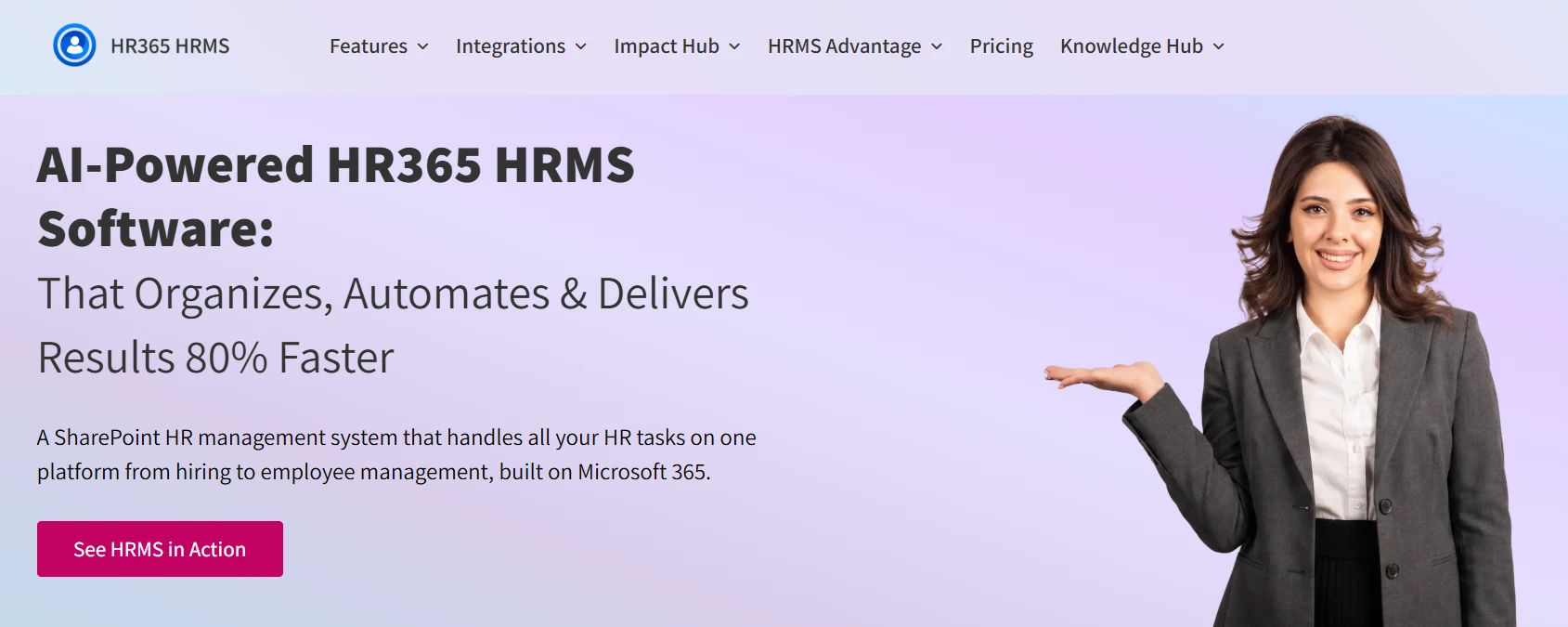
Best for: Small businesses using Microsoft 365
Overview
HR365 HRMS is an all-in-one HR platform designed to simplify employee management for small businesses. It combines core HR functions like employee records, time tracking, and performance management into a single system.
Key Features
- Employee data management
- Time and attendance tracking
- Performance management system
- Microsoft 365 integration
- Customizable reports and analytics
Why It Stands Out
HR365 HRMS works well for teams already using Microsoft tools. It keeps everything connected, making it easier to manage HR processes without switching between multiple systems.
Best for: Businesses looking for an easy-to-use HR system
Overview
BambooHR is known for its simple interface and clean design. It helps small businesses handle HR tasks without needing technical expertise.
Key Features
- Employee onboarding tools
- Leave and attendance management
- Performance tracking
- Reporting and analytics
- Employee database
Best for: Small teams needing payroll and compliance support
Overview
Gusto offers a practical solution for managing HR tasks along with payroll and employee benefits. It is designed for small businesses that want everything in one place.
Key Features
- Payroll management
- Tax filing and compliance
- Employee benefits management
- Self-service portal
- Basic HR tools
Best for: Businesses needing customization and flexibility
Overview
Zoho People provides a flexible HR system that can be tailored based on business needs. It is suitable for companies looking to customize workflows.
Key Features
- Attendance and leave tracking
- Recruitment management
- Performance tracking
- Employee self-service portal
- Integration with Zoho ecosystem
Best for: Businesses focused on compliance and support
Overview
Justworks is designed to handle HR operations with a strong focus on compliance. It helps small businesses manage administrative tasks with ease.
Key Features
- Payroll processing
- Benefits administration
- Tax compliance
- Automated filings
- Customer support
Best for: Improving employee engagement and experience
Overview
PeopleHum combines HR management with employee engagement tools. It helps businesses create a more connected and productive workplace.
Key Features
- Hiring and onboarding
- Engagement surveys
- Performance management
- Employee analytics
- Goal tracking
Best for: Performance management and feedback culture
Overview
Lattice is built for businesses that want to create a strong feedback-driven culture. It helps teams stay aligned through continuous performance tracking.
Key Features
- Goal setting (OKRs)
- Continuous feedback
- Performance reviews
- Engagement surveys
- Analytics dashboard
Best for: Microsoft-based HR environments
Overview
Beyond Intranet provides HR solutions built on Microsoft platforms, making it a natural fit for businesses using Microsoft 365.
Key Features
- Employee management
- Document management
- Internal communication tools
- Workflow automation
- Secure data handling
Best for: Managing HR and IT in one platform
Overview
Rippling combines HR and IT management, allowing businesses to manage employee data and system access together.
Key Features
- Employee onboarding
- App and device management
- Payroll and HR tools
- Automation workflows
- Centralized dashboard
Best for: Data-driven HR and scaling businesses
Overview
Workday is a powerful HR platform known for its advanced analytics and workforce planning tools. It is suitable for businesses planning long-term growth.
Key Features
- Workforce planning
- Performance management
- Advanced analytics
- Financial integration
- Reporting tools
Comparison of HR Software
| Tool | Description | Features | Integration | Best For | Rating |
| HR365 HRMS | All-in-one HR solution with Microsoft 365 integration. Centralizes employee data, automates tasks, and streamlines HR operations. | Time tracking, performance management, customizable reporting, compliance tracking | Microsoft 365, SharePoint, Teams, Outlook | Small businesses using Microsoft 365 needing an all-in-one HR solution | 4.8/5 |
| BambooHR | User-friendly HR platform for automating onboarding, leave tracking, and performance evaluations. | Onboarding automation, leave tracking, performance reviews, reporting & insights | HR apps and ATS tools | Small businesses wanting user-friendly automation for HR tasks | 4.6/5 |
| Gusto | Affordable HR solution with payroll automation and employee benefits management. | Payroll automation, benefits management, tax compliance, self-service | Payroll & benefits platforms | Small teams needing simple payroll and HR management | 4.5/5 |
| Zoho People | Customizable HR platform focusing on attendance, recruitment, and performance tracking. | Attendance management, recruitment, performance tracking, employee portals | Zoho suite apps, HR and productivity tools | Businesses needing customizable HR solutions within Zoho ecosystem | 4.4/5 |
| Justworks | Comprehensive HR and compliance platform with payroll, tax filing, and benefits automation. | Payroll automation, tax filing, benefits management, compliance tools | Payroll and benefits systems | Small businesses prioritizing compliance, payroll, and risk reduction | 4.3/5 |
| PeopleHum | HR platform combining core HR management with employee engagement tools to improve workplace experience and productivity. | Hiring and onboarding, engagement surveys, performance management, employee analytics, goal tracking | HR tools, productivity platforms, third-party apps | Businesses focusing on improving employee engagement and experience | 4.4/5 |
| Lattice | Performance management platform designed to build a strong feedback-driven culture and align teams. | Goal setting (OKRs), continuous feedback, performance reviews, engagement surveys, analytics dashboard | Slack, Microsoft Teams, HR systems | Companies focused on performance management and feedback culture | 4.5/5 |
| Beyond Intranet | Microsoft-based HR solution that integrates HR processes within Microsoft 365 environments. | Employee management, document management, internal communication tools, workflow automation, secure data handling | Microsoft 365, SharePoint, Teams | Organizations using Microsoft 365 for HR operations | 4.6/5 |
| Rippling | Unified platform that combines HR and IT management in one system. | Employee onboarding, app/device management, payroll, automation workflows, centralized dashboard | IT systems, HR tools, payroll platforms | Businesses wanting HR and IT management together | 4.5/5 |
| Workday | Enterprise-level HR platform with advanced analytics and workforce planning capabilities. | Workforce planning, performance management, advanced analytics, financial integration, reporting tools | ERP systems, financial tools, enterprise apps | Scaling businesses and enterprises needing data-driven HR decisions | 4.6/5 |
Benefits of HR Management Software for Small Business
- Time and Cost Savings: Automating HR processes like, attendance tracking, and performance management saves time and reduces administrative costs. This allows HR teams to focus on high-value tasks and strategic initiatives.
- Improved Accuracy: HR management tools reduces the risk of human error in payroll, attendance tracking, and compliance. With accurate data collection and real-time updates, businesses can avoid costly mistakes and penalties.
- Enhanced Compliance: By staying up-to-date with labour laws, tax regulations, and industry standards, HRMS software ensures small businesses remain compliant. It generates audit-ready reports and automates compliance tracking, reducing the risk of fines.
- Better Employee Engagement: With self-service portals and streamlined processes, employees have more control over their HR-related tasks, leading to increased satisfaction. The transparency and ease of access to information improve trust between employees and management.
- Scalability: As small businesses grow, HR software scales to meet new needs, whether it is managing a larger workforce or adding additional features for more complex HR tasks. It allows businesses to expand without the need for significant manual effort or system upgrades, making it a long-term solution for growth.
- Data-Driven Insights: HR software provides actionable insights into employee performance, attendance trends, and other key metrics. This data helps managers make informed decisions about workforce planning, resource allocation, and employee development.
Best Practices for Implementing small business human resource software
- Start with Clear Objectives
Before selecting HR software, it’s essential to understand your business’s HR needs. Define the challenges you’re facing (e.g. compliance issues, employee engagement) and ensure that the software you choose addresses these concerns. - Involve Key Stakeholders
Engage HR, and IT teams early in the decision-making process. Collaboration helps ensure smoother implementation and ensures all departments are on board with the change, reducing resistance during adoption. - Focus on Ease of Use and Integration
Choose HR software that’s easy to use and integrates seamlessly with other tools your business uses, such as accounting software and time-tracking systems. This reduces training time and ensures better data flow across platforms. - Ensure Data Security and Compliance
HR software must meet regulatory requirements and protect employee data. Look for solutions with strong data encryption, compliance features, and automated reporting to help with audits and tax filings. - Automate Where Possible
Take full advantage of automation features, such as, attendance tracking, and benefits administration. By automating routine tasks, HR teams can focus more on strategic initiatives like employee engagement and development. - Train Your Team Effectively
Invest in proper training for HR teams and employees. Provide onboarding sessions to ensure everyone understands how to use the system, maximizing the benefits and reducing the chances of errors. - Monitor and Evaluate
Regularly review the performance of the HR software to ensure it’s meeting your business needs. Gather feedback from HR staff and employees to identify areas for improvement and make adjustments as necessary.
How to Choose the Best Rated HR Software for Small Business?
- Assess Your Business Needs: Identify the specific HR tasks you need to streamline and automate, such as, time tracking, performance management, or employee benefits. Understanding your key requirements will help you find the best HR software that fits your small business needs.
- Look for User-Friendly Interface: Small businesses often do not have large IT teams, so it’s important to choose an HR software that’s intuitive and easy to use. A user-friendly interface will reduce training time and ensure a smoother implementation.
- Ensure Integration with Existing Tools: The best HR management software should integrate seamlessly with your other business tools such as payroll systems, accounting software, or project management tools. This will help streamline operations and reduce data duplication.
- Check for Scalability: Choose software that can grow with your business. As your company expands, you will need HR software that can accommodate a larger workforce and additional features. Make sure the solution offers scalability options without significant upgrades or downtime.
- Prioritize Security and Compliance Features: Ensure the HR software adheres to the latest security standards and compliance regulations. Features such as data encryption, automated tax calculations, and labor law updates will protect your business from legal and security risks.
- Evaluate Customer Support and Service: Good customer support is essential for resolving any issues that may arise. Look for a vendor that offers responsive customer service, tutorials, and ongoing support to help you maximize the use of your HR management software.
Why Choose HR365 HRMS for Small Business?
Small businesses need HR software that brings core HR tasks into one place without adding unnecessary complexity. HR365 HRMS is built for organizations using Microsoft 365, SharePoint, and Teams.
1. Built for Microsoft 365 – Manage HR activities within the Microsoft ecosystem your business already uses, including SharePoint and Teams.
2. Centralized Employee Information – Store employee profiles, documents, organizational details, and directory information in one accessible system.
3. Simpler Employee Onboarding – Organize joining tasks, employee information, documents, and onboarding activities from a central workspace.
4. Manage Everyday HR Tasks – Handle leave, attendance, timesheets, performance, learning, expenses, and task management from one platform.
5. AI and HR Automation – Use AI and automation to support routine HR activities, approvals, notifications, and other repetitive processes.
6. Clear HR Insights – Use HR dashboards to view leave and attendance, recruitment, performance, learning, expenses, tasks, and other key HR activities.
Conclusion
Investing in HR management software for small business is no longer a luxury it is a necessity for businesses aiming to optimize operations and boost employee satisfaction. By automating time-consuming tasks such as performance management, compliance tracking, and time management, small businesses can shift their focus from manual HR processes to meaningful growth. If you are ready to improve HR efficiency and build a more organized workplace, now is the time to act.
Start your 14-day risk-free trial and book a demo to see how the right HRMS can transform the way you manage your team.
Join Our Creative Community
Frequently Asked Questions
What is HR Management Software for Small Business?
HR Management Software for Small Business is a tool designed to help small organizations manage tasks such as, recruitment, time tracking, performance management, and compliance. It automates HR processes, improves efficiency, and allows HR teams to focus on strategic growth.
What are the key features of the best HR systems for small companies?
The best HR systems for small companies simplify HR processes by offering centralized employee data management, time and attendance tracking, recruitment and onboarding tools, performance evaluation, compliance reporting, and employee self-service. These features help reduce manual tasks, improve accuracy, and keep teams organized as the business grows.
How does HR Management Software benefit small businesses?
HR software saves time and reduces administrative costs by automating payroll, attendance, and performance management. It ensures accuracy, enhances compliance with labor laws, improves employee engagement, and scales with business growth.
How do I choose the right HR Management Software for my small business?
Choose HR software by assessing your specific needs, such as automation or performance management. Look for ease of use, scalability, integration with existing tools, security features, and strong customer support to ensure it meets your business’s long-term needs.
Why should small businesses choose HRMS by Apps365?
HRMS by Apps365 offers a cost-effective, scalable solution that integrates with Microsoft 365, automates payroll and time tracking, and ensures compliance. It simplifies HR tasks, provides real-time reporting, and scales with business growth, making it a perfect fit for small businesses.
How does HR management software for small businesses support remote teams?
Many HR management software solutions for small businesses now offer features like virtual onboarding, digital document signing, remote time tracking, and cloud-based employee portals—all designed to help distributed teams stay connected and productive without the need for in-person processes
Who can benefit from the Best Rated HR Software for Small Business?
The Best Rated HR Software for Small Business is ideal for growing teams that want to manage employee data, onboarding, performance, and attendance from one place. Whether you have five employees or fifty, this software helps simplify daily HR tasks, improve communication, and create a smoother employee experience without needing a large HR department.
Does HR management software for small businesses offer mobile access?
Many solutions provide mobile apps or responsive web portals that enable employees and managers to access HR tasks like leave requests, expense submits, and payslips on the go.
How can the Best Rated HR Software for Small Business improve employee management?
The Best Rated HR Software for Small Business streamlines every stage of the employee lifecycle from hiring and onboarding to performance tracking and offboarding. It automates repetitive HR tasks, keeps all employee information organized, and provides real-time insights that help business owners make smarter decisions while saving time and improving overall productivity.


_JiluXJRGNl.svg)