
Best Online Onboarding Software Tools for Businesses in 2026

A new employee’s first week can quietly decide their future with your company. Yet in many organizations, onboarding still feels like a patchwork of emails, PDFs, spreadsheets, and last-minute follow-ups. The result is predictable confusion, disengagement, and in some cases, early attrition. When new hires don’t feel guided or connected from day one, productivity slows down and culture takes a hit.
- Onboarding software replaces manual paperwork with automated, guided workflows.
- AI now drives task suggestions and personalized learning paths in most top tools.
- The right tool depends on your team size, budget, and existing tech stack.
- Strong onboarding boosts retention and helps new hires become productive faster.
This is where online onboarding software has come in handy. Businesses are no longer relying on manual processes to provide consistent onboarding experiences to their employees, but rather structured, automated, and intelligent systems are being used, regardless of whether the employee is remote, hybrid, or in-office.
What is Online Onboarding Software?
Onboarding software is a digital tool that helps companies welcome and train new hires. It brings together document collection, training, and communication in one place. Instead of juggling separate tools, HR teams and managers can run the whole process from a single dashboard. New hires get a clear, step-by-step path instead of scattered instructions.
Why Businesses Need Onboarding Software in 2026
Work has changed a lot in the last few years, and onboarding needs to keep up. Here’s why more businesses are switching to dedicated software this year.
Remote and Hybrid Work Is Now Normal
Many new hires never step into an office on day one. They need a smooth digital experience instead of a stack of paperwork. Onboarding software delivers that experience from anywhere. This keeps remote and in-office hires on equal footing.
Faster Time to Productivity
Manual onboarding wastes valuable time in the first weeks. Software automates routine steps like forms and IT setup. This lets new hires focus on learning their actual job faster. Companies see quicker results from every new hire.
Stronger Employee Retention
A confusing start often leads to early resignations. Structured onboarding helps new hires feel supported from day one. This builds trust and loyalty right from the start. Better retention means lower hiring costs over time.
Fewer Missed Steps and Errors
Spreadsheets and emails are easy to lose track of. Software checklists make sure nothing falls through the cracks. Every task, form, and sign-off gets tracked automatically. This reduces costly compliance mistakes.
Custom Journeys for Every Role
Not every employee needs the same onboarding path. Modern tools let you build separate journeys by role or department. A sales hire and an engineer can follow very different plans. This makes training more relevant and useful.
Smarter Onboarding Through AI
AI is now a core part of many onboarding platforms. It can suggest tasks, automate steps, and personalize learning. This turns onboarding into an active, evolving process. Companies that use AI see smoother, faster rollouts.
Not sure if your team is ready to automate onboarding?
Top 13 Online Onboarding Software Tools
Below are the 20 best online onboarding tools for 2026. Each one fits a different type of business, from small startups to global enterprises.
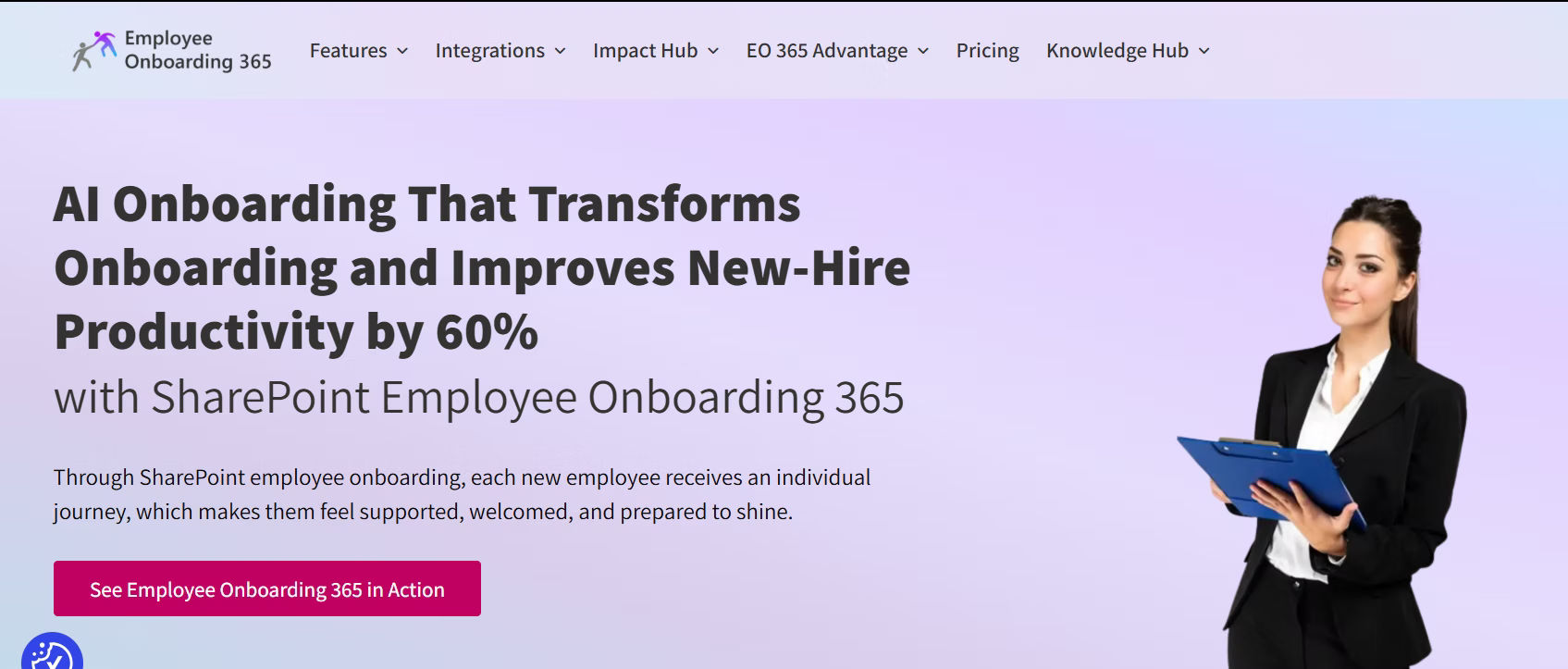
Employee Onboarding 365 is a modern, AI-driven tool built for businesses already using Microsoft 365. It connects directly with Teams, SharePoint, and Power Automate, so companies don’t need to learn a new system.
It works best for organizations that want one connected home for onboarding, instead of juggling separate apps. Its main strength is smart automation using tools employees already know.
Key Features:
- Native integration with Teams, SharePoint, and Outlook
- AI-driven task suggestions and workflow automation
- Role-based and department-based onboarding journeys
- Built-in document management and compliance tracking
- Real-time dashboards for onboarding progress
Benefits:
- Cuts the learning curve since staff already use Microsoft tools
- Saves HR time through smart automation
- Keeps everything in one connected system
- Improves compliance with automatic tracking
- Scales easily as your team grows
Key Metrics:
- Best For: Microsoft 365 businesses of any size
- Deployment Time: Fast, minimal new training needed
- Integration Level: Deep, native Microsoft ecosystem
- Pricing Tier: Flexible, scales with company size
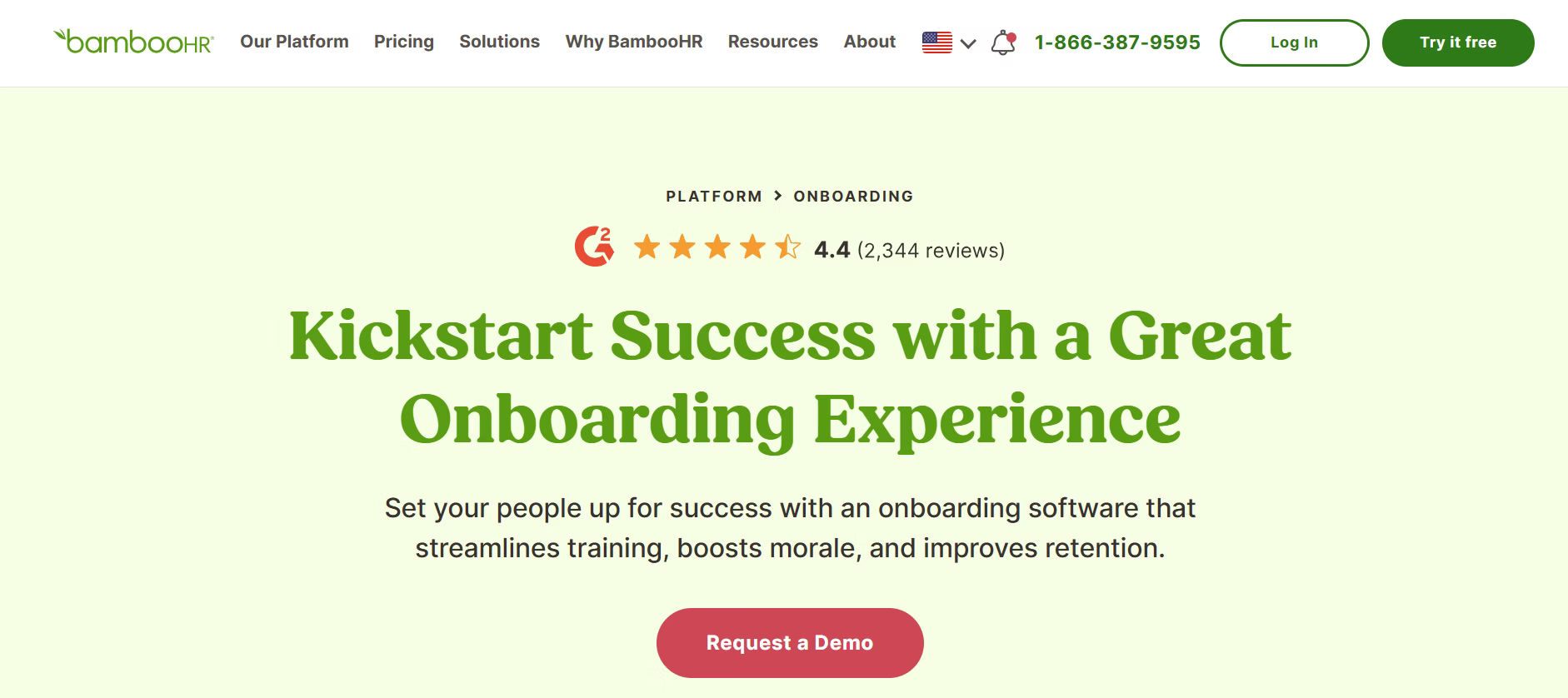
BambooHR is a well-known HR platform built for small and mid-sized businesses. It brings onboarding tasks, documents, and communication into one clean, simple dashboard.
This makes it a good fit for growing companies that want an easy system without heavy setup. It’s known for being simple, stable, and quick to launch.
Key Features:
- Preboarding workflows before day one
- Electronic signatures and document storage
- Self-service portal for new hires
- Custom onboarding checklists
- Basic reporting on onboarding progress
Benefits:
- Very easy to learn and use
- Gets up and running quickly
- Works well with existing HRIS data
- Reduces paperwork for HR teams
- Keeps new hire records organized
Key Metrics:
- Best For: Small to mid-sized businesses
- Deployment Time: Quick, low training needed
- Integration Level: Strong HRIS connections
- Pricing Tier: Affordable for growing teams
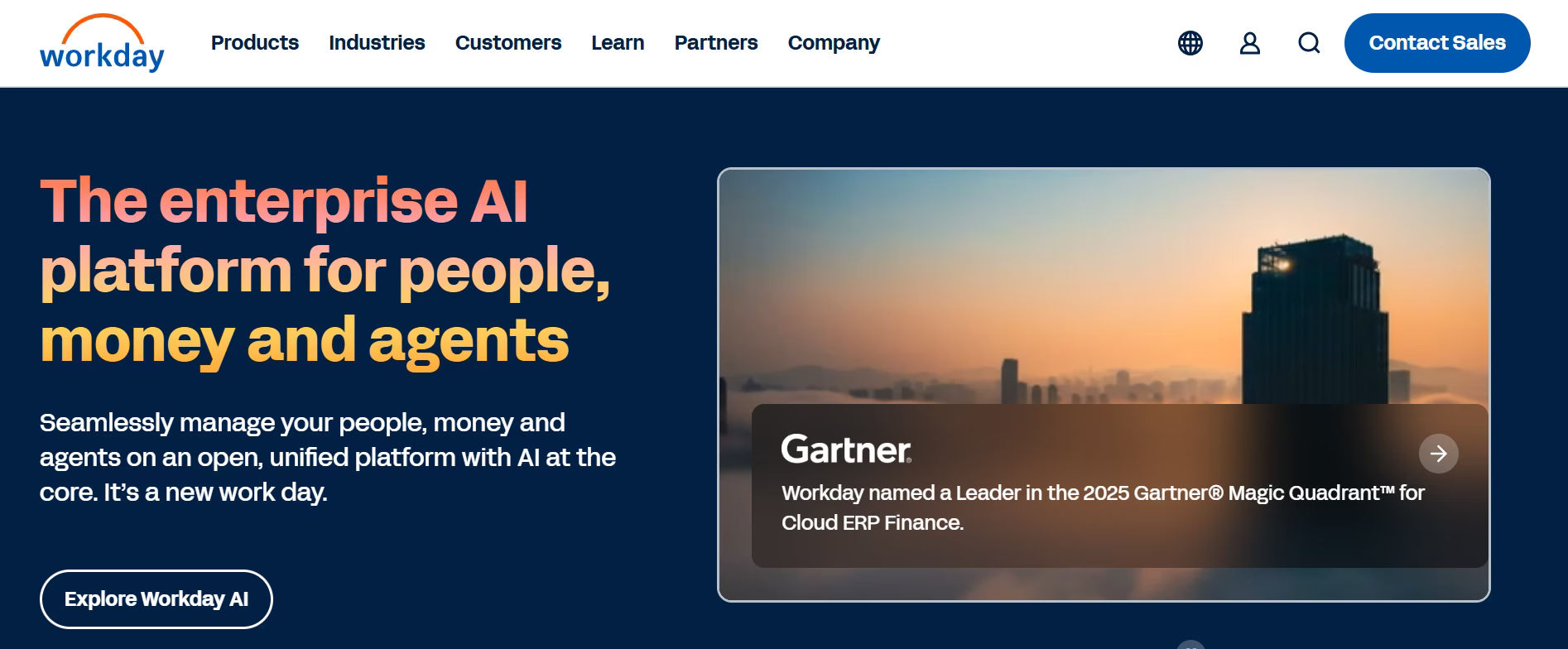
Workday is a large-scale human capital management suite with built-in onboarding tools. It’s made for big companies that need deep features and one unified system.
It works especially well for enterprises with multiple regional offices that need strict compliance and reporting. It’s positioned as a complete, data-driven HR platform.
Key Features:
- End-to-end HR lifecycle management
- Advanced analytics and reporting
- Role-based onboarding workflows
- Global compliance and localization support
- Deep integration across the Workday ecosystem
Benefits:
- Handles global and complex organizations well
- Offers a full HR ecosystem in one place
- Gives leaders strong data-driven insights
- Supports many languages and regions
- Reduces the need for extra HR tools
Key Metrics:
- Best For: Large, global enterprises
- Deployment Time: Longer, complex setup
- Integration Level: Full HR ecosystem
- Pricing Tier: Higher cost, enterprise-focused
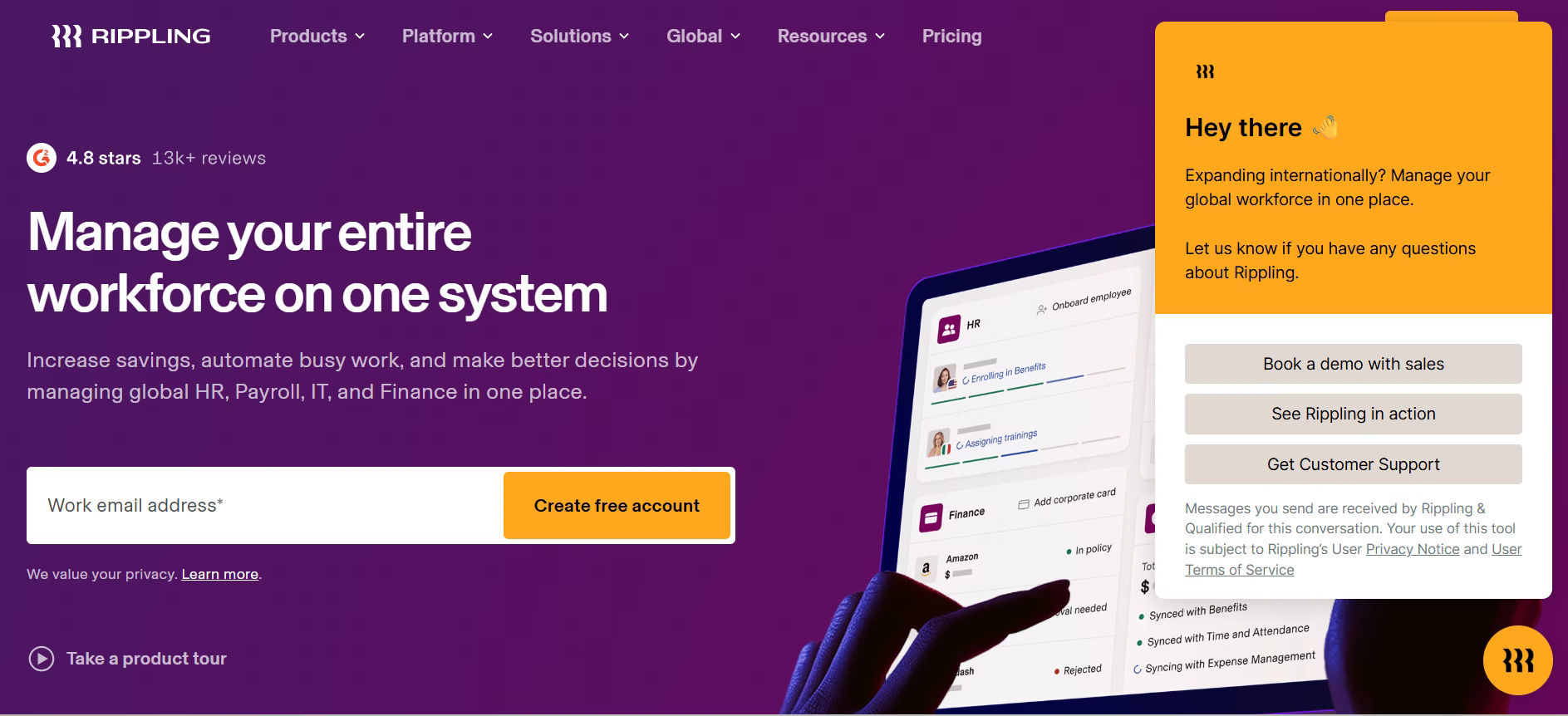
Rippling combines HR, IT, and finance into one platform. Its onboarding tools go beyond forms by automating device setup, app access, and system provisioning.
This makes it useful for companies that want to manage HR and IT onboarding together. It positions itself as an all-in-one platform for the full employee setup process.
Key Features:
- Automated device and app provisioning
- Workflow automation for onboarding tasks
- Payroll and benefits integration
- Custom onboarding workflows
- Centralized employee data management
Benefits:
- Saves IT teams time on device setup
- Connects HR, payroll, and IT in one view
- Reduces manual work across departments
- Speeds up new hire system access
- Grows with your company’s needs
Key Metrics:
- Best For: Companies wanting HR + IT in one tool
- Deployment Time: Moderate, needs configuration
- Integration Level: Very high across systems
- Pricing Tier: Scales with added modules
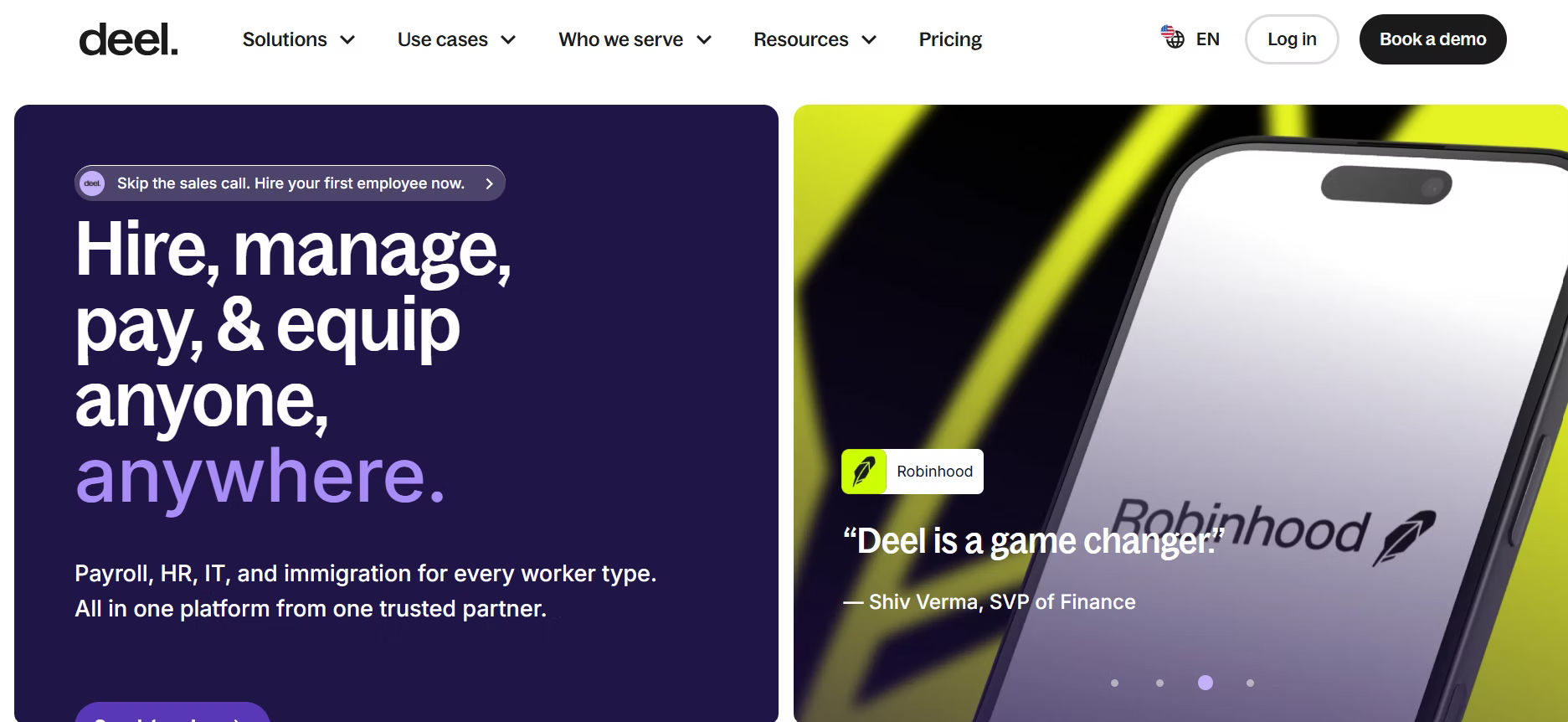
Deel is built for companies hiring across borders. It simplifies the tricky parts of global onboarding, like contracts, compliance, and payments, all in one place.
It’s especially useful for companies entering new markets or managing remote teams worldwide. Its focus is clearly on compliant, global hiring at scale.
Key Features:
- Global hiring and compliance support
- Contract and document management
- Localized onboarding workflows by country
- Payment and payroll integration
- Support for contractors and full-time staff
Benefits:
- Makes international hiring far simpler
- Reduces legal and compliance risk
- Speeds up cross-border onboarding
- Supports many currencies and contract types
- Removes need for local legal teams
Key Metrics:
- Best For: Global and remote-first teams
- Deployment Time: Fast for global hiring needs
- Integration Level: Moderate, hiring-focused
- Pricing Tier: Per-employee, scales globally
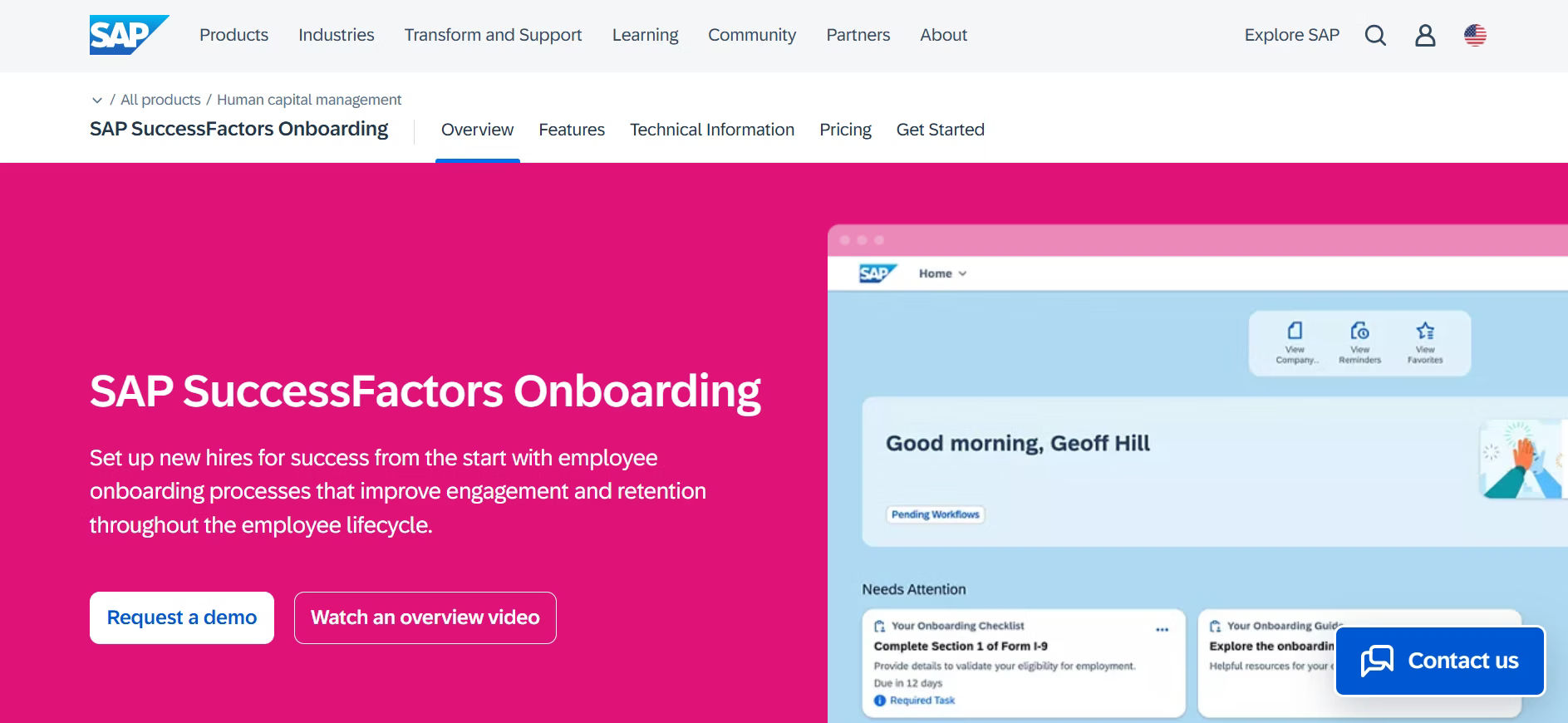
SAP SuccessFactors offers enterprise-level onboarding as part of its full human experience management suite. It helps large companies build structured onboarding journeys at scale.
It works best for enterprises already using SAP systems. Its strength lies in strong data insights and global consistency.
Key Features:
- Structured, multi-step onboarding journeys
- Deep integration with the SAP ecosystem
- Advanced reporting and analytics tools
- Global compliance management
- Role-based workflow customization
Benefits:
- Fits naturally into existing SAP setups
- Gives leaders strong data insights
- Keeps global operations consistent
- Supports very large employee volumes
- Improves long-term workforce planning
Key Metrics:
- Best For: Large SAP-based enterprises
- Deployment Time: Long, complex rollout
- Integration Level: Deep SAP ecosystem
- Pricing Tier: High, enterprise pricing
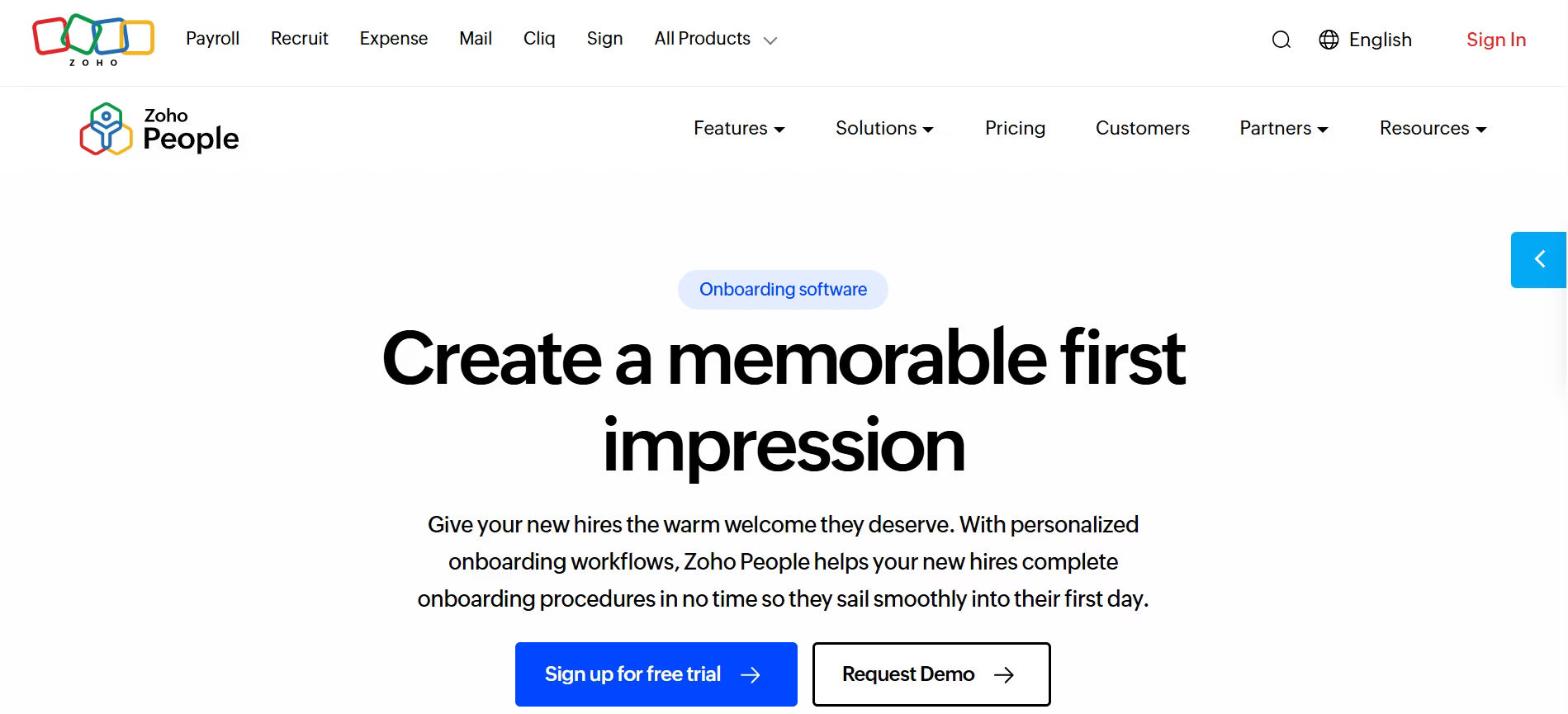
Zoho People is a budget-friendly HR tool for growing businesses. It offers a simple onboarding process that works especially well for teams already using other Zoho apps.
It suits small to mid-sized companies looking for an affordable, easy-to-manage solution. Its focus is low cost with solid Zoho integration.
Key Features:
- Structured onboarding workflows
- Employee database management
- Time tracking integration
- Document management tools
- Custom onboarding forms
Benefits:
- Keeps onboarding costs low
- Works smoothly with other Zoho apps
- Simple enough for small HR teams
- Covers core onboarding needs well
- Easy to set up without heavy training
Key Metrics:
- Best For: Small to mid-sized businesses
- Deployment Time: Fast, simple setup
- Integration Level: Strong within Zoho apps
- Pricing Tier: Budget-friendly
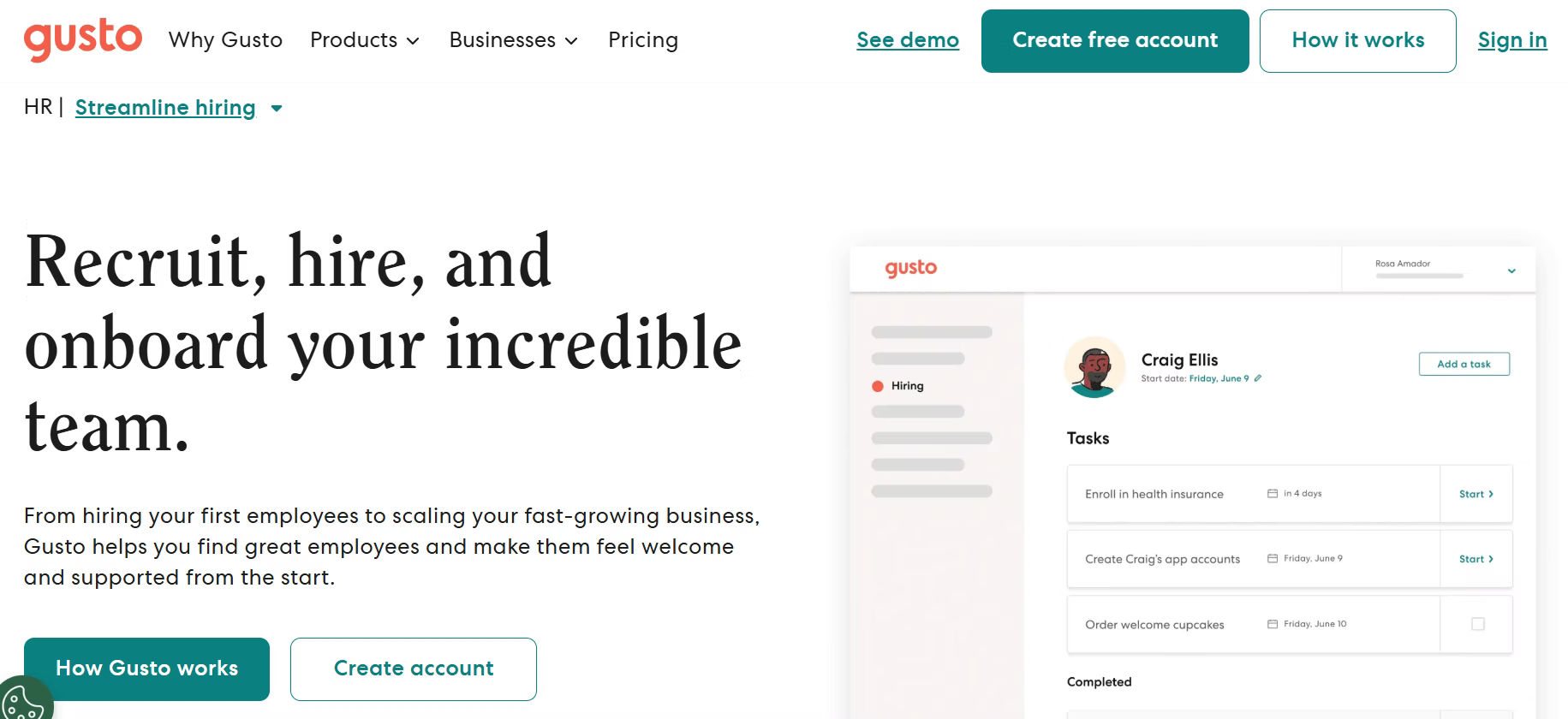
Gusto is a payroll-first HR platform that includes onboarding as part of its core service. It bundles employee setup with payroll, benefits, and compliance tasks.
This makes it a strong pick for startups and small teams that want to avoid extra complexity. It’s known for being simple and easy to start using.
Key Features:
- Digital onboarding forms
- Payroll integration from day one
- Benefits administration tools
- Employee self-service portal
- Automatic tax and compliance forms
Benefits:
- Very simple for small teams to adopt
- Combines onboarding with payroll setup
- Reduces paperwork for new hires
- Keeps compliance forms organized
- Low learning curve for HR staff
Key Metrics:
- Best For: Startups and small businesses
- Deployment Time: Very fast
- Integration Level: Strong payroll focus
- Pricing Tier: Affordable, per-employee
ADP Workforce Now brings strong onboarding tools to mid-to-large companies. It keeps new hire setup aligned with payroll and record-keeping rules.
It’s a good fit for businesses that want a stable, trusted provider with strong support. Its focus is compliance backed by decades of HR experience.
Key Features:
- Automated onboarding workflows
- Compliance tracking and documentation
- Payroll and HR data integration
- Reporting and analytics tools
- Multi-state and multi-country support
Benefits:
- Backed by a trusted, established brand
- Strong compliance and legal support
- Keeps payroll and onboarding aligned
- Reliable for larger workforces
- Reduces regulatory risk
Key Metrics:
- Best For: Mid-to-large businesses
- Deployment Time: Moderate to long
- Integration Level: Strong payroll and HR link
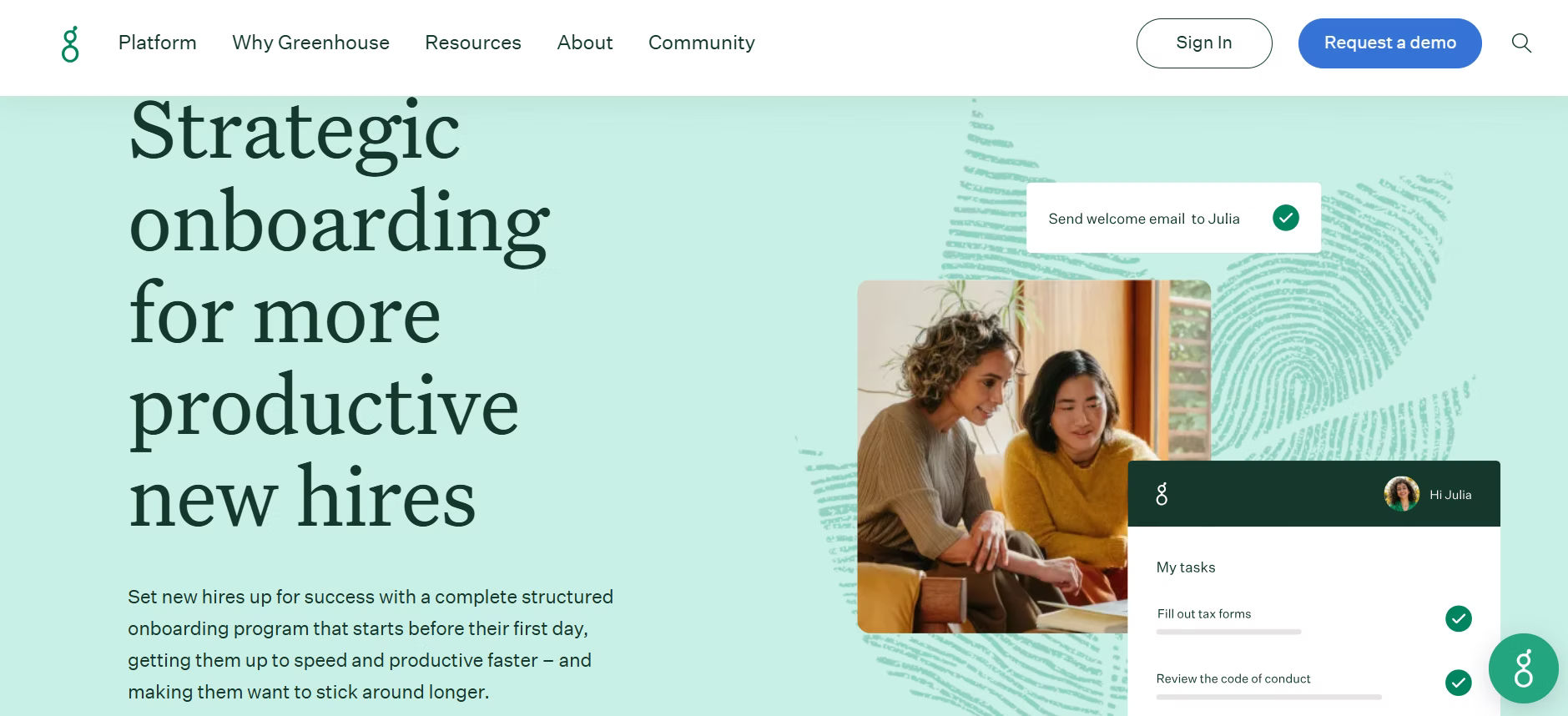
Greenhouse Onboarding extends its popular hiring platform into the onboarding stage. It helps candidates move smoothly from being hired to becoming active employees.
It’s a great fit for companies already using Greenhouse for recruiting. Its strength is continuity between hiring and onboarding.
Key Features:
- Candidate-to-employee transition workflows
- Custom onboarding plans by role
- Task tracking and progress management
- Integration with existing HR tools
- Structured new-hire checklists
Benefits:
- Keeps hiring and onboarding connected
- Reduces data re-entry between systems
- Gives new hires a consistent experience
- Speeds up early task completion
- Works well for recruiting-heavy teams
Key Metrics:
- Best For: Companies already using Greenhouse ATS
- Deployment Time: Fast for existing users
- Integration Level: Strongest within Greenhouse
- Pricing Tier: Add-on to ATS pricing
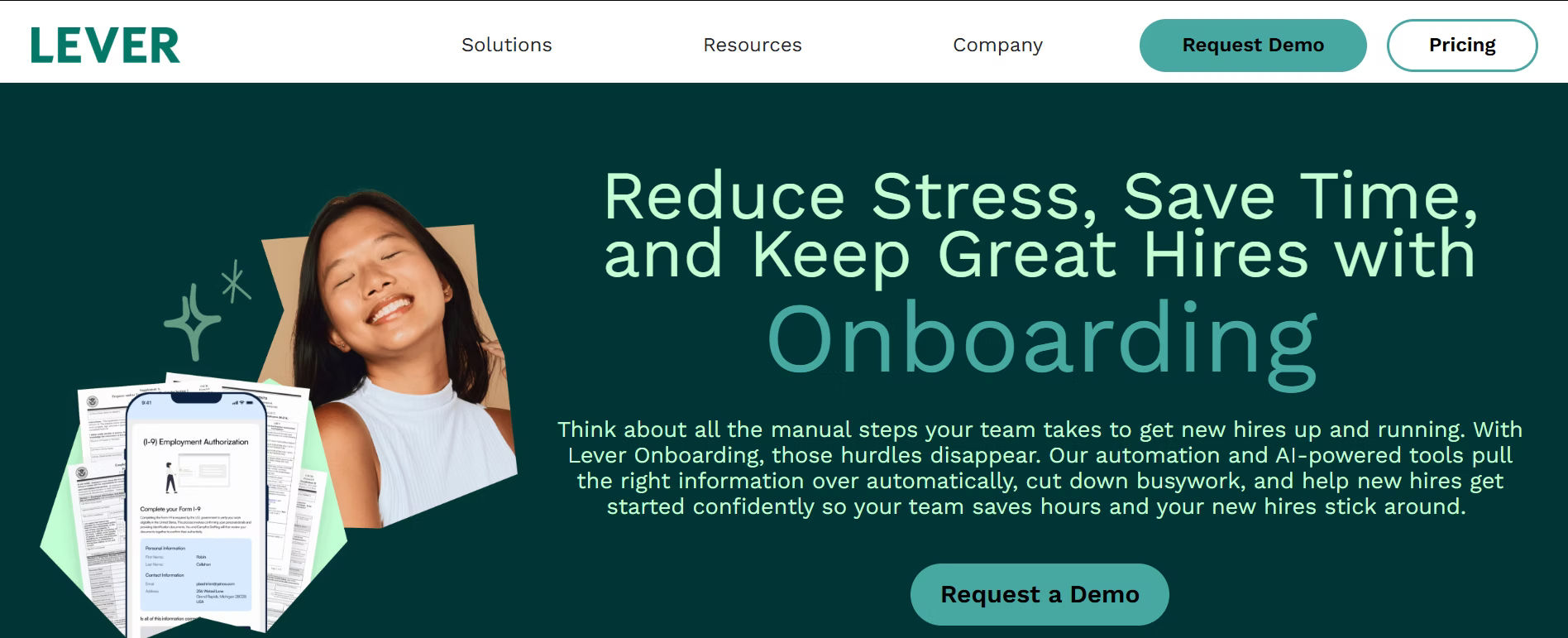
Lever combines recruiting and onboarding software into one connected flow. It helps teams move candidates smoothly into employees while tracking every onboarding task.
This makes it a solid choice for companies wanting hiring and onboarding under one roof. Its focus is teamwork and collaboration across hiring stages.
Key Features:
- Combined hiring and onboarding workflows
- Candidate management system
- Onboarding task tracking
- Team collaboration tools
- Integration with other HR software
Benefits:
- Keeps hiring teams and HR aligned
- Reduces handoff friction between stages
- Improves visibility into new hire progress
- Supports collaborative hiring decisions
- Simplifies early-stage HR workflows
Key Metrics:
- Best For: Recruiting-focused organizations
- Deployment Time: Moderate
- Integration Level: Good with HR tools
- Pricing Tier: Mid-range, ATS-linked
Freshteam is HR software built for growing businesses that want a simple onboarding process. It helps HR teams manage hiring, onboarding, and employee records without added complexity.
It works well for startups and small-to-mid businesses on a budget. Its focus is ease of use at a low price point.
Key Features:
- Task management for onboarding activities
- Document collection and storage
- Dedicated employee onboarding portal
- Integration with other Freshworks tools
- Simple HR record-keeping
Benefits:
- Very easy for small teams to adopt
- Keeps onboarding costs low
- Reduces manual document handling
- Works well alongside other Freshworks apps
- Fast to set up and start using
Key Metrics:
- Best For: Startups and small businesses
- Deployment Time: Fast
- Integration Level: Strong within Freshworks
- Pricing Tier: Budget-friendly
ClearCompany is a talent management platform with onboarding as a core feature. It links onboarding to hiring, performance, and long-term employee engagement.
This makes it valuable for companies that want onboarding tied to a bigger talent strategy. Its strength is flexibility across the full employee lifecycle.
Key Features:
- Onboarding checklists and task tracking
- Workflow automation for new hires
- Employee engagement tools
- Reporting dashboards and insights
- Links to performance management data
Benefits:
- Connects onboarding to long-term talent goals
- Offers customizable workflows
- Improves visibility into new hire success
- Supports engagement beyond day one
- Useful for performance-driven teams
Key Metrics:
- Best For: Talent-focused mid-sized companies
- Deployment Time: Moderate, needs setup
- Integration Level: Strong within talent suite
- Pricing Tier: Mid-range
How to Choose the Right Onboarding Software
Choosing the right online onboarding software is less about picking the most popular tool and more about finding the right fit for your organization. Start with scalability. A solution that works for 50 employees should still perform well when you reach 500 or 5,000.
Integration is also very important. Most of the tools claim to be automated, but unless they are fully integrated into your current systems, they will cause you more work than good. This is where such services as Employee Onboarding 365 shine, particularly when the company is already on Microsoft tools.
Check for Scalability
Your team will likely grow over time. A tool that works for 50 people should still work at 500. Ask vendors how their pricing and features scale. This avoids a costly switch later.
Prioritize Real Integration
Many tools claim to be automated. But without real integration, they create more work, not less. Check how well a tool connects with your current systems. This is where tools like Employee Onboarding 365 stand out for Microsoft users.
Look for True AI Capabilities
AI is now a major differentiator among onboarding tools. Good AI does more than automate; it improves decisions. Look for personalization, not just task reminders. This makes onboarding smarter over time.
Test Usability Early
A powerful tool is useless if no one can use it. Test the system with both HR staff and new hires. Poor usability leads to low adoption rates. Simple, clean interfaces win in the long run.
Match Pricing to Real Value
Some tools look cheap at first glance. But costs can rise fast with scale or added features. Compare total cost, not just the sticker price. Choose value over the lowest initial number.
Review Support and Security
Onboarding tools handle sensitive employee data. Check the vendor’s security certifications and data policies. Also confirm what support is available after launch. Good support prevents small issues from becoming big problems.
Conclusion
Onboarding is no longer just an HR task. It’s a business decision that shapes retention, productivity, and how new hires feel about your company. With so many online onboarding tools available in 2026, businesses finally have the power to deliver a consistent, engaging experience at any scale.
The real difference between tools isn’t just features. It comes down to integration, automation, and how well a tool fits your existing systems. If your company already runs on Microsoft 365, a tool like Employee Onboarding 365 offers a clear advantage. It brings AI-driven onboarding directly into the tools your team already uses every day.
Still deciding between tools?
Let our team match you with the right onboarding software for your budget.
Join Our Creative Community
Frequently Asked Questions
It’s a digital platform that automates and streamlines the entire new employee or customer integration process, handling paperwork, training modules, and access provisioning through intuitive web or mobile portals for seamless efficiency.
Essential features include customizable automated workflows, secure e-signatures, real-time progress tracking, mobile-responsive access, and seamless integrations with HRIS and payroll systems to boost productivity.
It significantly reduces onboarding time by up to 50%, minimizes administrative errors, enhances new hire satisfaction and retention rates, supports fully remote teams, and cuts paperwork costs through smart analytics and reminders.
Pricing generally ranges from $4–$25 per active user per month for standard plans, with free trials available, scaling to custom enterprise tiers at $50+ for advanced compliance and global features.
Absolutely, top solutions offer fully branded portals, multi-language support, industry-specific templates (like healthcare compliance or sales onboarding), and flexible checklists to match unique company cultures and scales.


_JiluXJRGNl.svg)























