


Managing subscription revenue can feel challenging. Businesses often deal with fluctuating churn, layered pricing models, and missed opportunities to grow account value. These gaps can directly impact long-term revenue potential.
This blog explores how revenue management software empowers businesses to maximize profits, optimize pricing strategies, and streamline operations. It highlights key features, benefits, and practical insights to help companies make data-driven decisions and drive sustainable growth.
This is where revenue management software adds real value. It supports pricing optimization, improves visibility into recurring income, and helps increase customer lifetime value while keeping revenue patterns more stable and easier to plan.
According to study by Grand View Research, the global subscription economy reached USD 492.34 billion in 2024 and is expected to grow to USD 1,512.14 billion by 2033, with a CAGR of 13.3% from 2025 to 2033. This growth highlights how important it is for businesses to manage recurring revenue effectively.
What Is Revenue Management Software?
Revenue management software is a centralized platform designed to manage recurring revenue activities in one place. It brings together subscription data, billing operations, and financial tracking, reducing the need for manual handling.
For subscription-based businesses, consistent revenue depends on renewals, upgrades, and customer retention. This software simplifies these processes by automating billing cycles, providing real-time insights, and helping businesses analyse future subscription revenue trends.
In simple terms, it helps businesses set optimal pricing, lower churn, and increase customer lifetime value. Whether it is a SaaS product, digital service, or membership platform, it supports stable revenue flow and steady business growth.
How Does Revenue Management Software Work?
Revenue management software combines subscription management, billing, invoicing, and revenue tracking into a single system. This allows businesses to manage income efficiently and plan growth with clarity. Here’s how it works step by step:
1. Customer Subscription Setup
The process begins when a customer selects a subscription plan. The system captures key details such as customer information, selected plan, billing cycle (monthly, quarterly, or yearly), and payment method. This setup allows future renewals, upgrades, and downgrades to happen automatically. It also keeps all customer data organized and easy to access.
2. Automated Billing
Once the subscription is active, billing happens automatically based on the chosen cycle. Payments are processed on time without manual involvement. The automated subscription billing improves accuracy, saves time, and supports consistent cash flow since payments are collected as scheduled.
3. Invoice Generation
After each payment, the platform creates and sends invoices instantly. These invoices are clear, consistent, and professionally formatted. For businesses, this reduces administrative effort and keeps all financial records well documented for accounting and compliance needs.
4. Transaction Tracking
The software tracks every transaction and updates its status successful, pending, or failed. If a payment fails, the system can trigger reminders or retry the charge automatically. This helps reduce revenue loss and keeps collections active without constant monitoring.
5. Revenue Recognition
SaaS revenue recognition plays a key role in subscription businesses. The software records and categorizes revenue in real time, including:
- Monthly Recurring Revenue (MRR)
- Annual Recurring Revenue (ARR)
- One-time payments
- Plan changes such as upgrades, downgrades, or cancellations
This structured approach supports accurate financial reporting and better visibility into business performance.
6. Renewal Management
Renewals are a major driver of recurring revenue. The software manages subscription renewals automatically as subscription dates approach. If customers make changes to their plans, those updates are reflected instantly in the system. This gives businesses a clear view of retention patterns and opportunities to improve customer relationships.
7. Real-Time Analytics and Reporting
A built-in subscription analytics dashboard provides live insights into important business metrics. Teams can monitor performance, identify trends, and respond quickly to changes. For example, if churn increases, businesses can take timely action with retention strategies.
8. Forecasting and Growth Planning
Using historical data and customer behavior, the software predicts future revenue and growth opportunities. It highlights potential upgrades, identifies accounts at risk of churn, and estimates future earnings. This supports better planning for budgeting, hiring, and expansion decisions
10 Best Revenue Management Software in 2026
We reviewed leading global revenue management platforms, including Revenue 365, to identify the top solutions for 2026. This list highlights 10 tools that help businesses improve renewals, billing, and recurring revenue growth.
Product | Integrations | Free Trial |
Revenue 365 | SharePoint, MS Teams, Outlook and Power BI | 14 days |
Chargebee | Salesforce, NetSuite, Xero, PayPal, Stripe | 14 days |
Maxio | Salesforce, HubSpot, NetSuite, QuickBooks | Contact Sales |
Zuora | Salesforce, SAP and HubSpot | 30 days |
DealHub.io | Salesforce and HubSpot | Connect with sales Team |
Subscription Flow | Quickbooks, Avalara, Mailchimp, and Paypal | Connect with sales Team |
RevOps.io | HubSpot, Slack and DocuSign | 14 days |
Recurly | Salesforce, HubSpot, NetSuite, QuickBooks | 30 days |
Paddle | Stripe, PayPal, HubSpot and QuickBooks | 14 days |
Billing Platform | Salesforce | 14 days |
1) Revenue 365
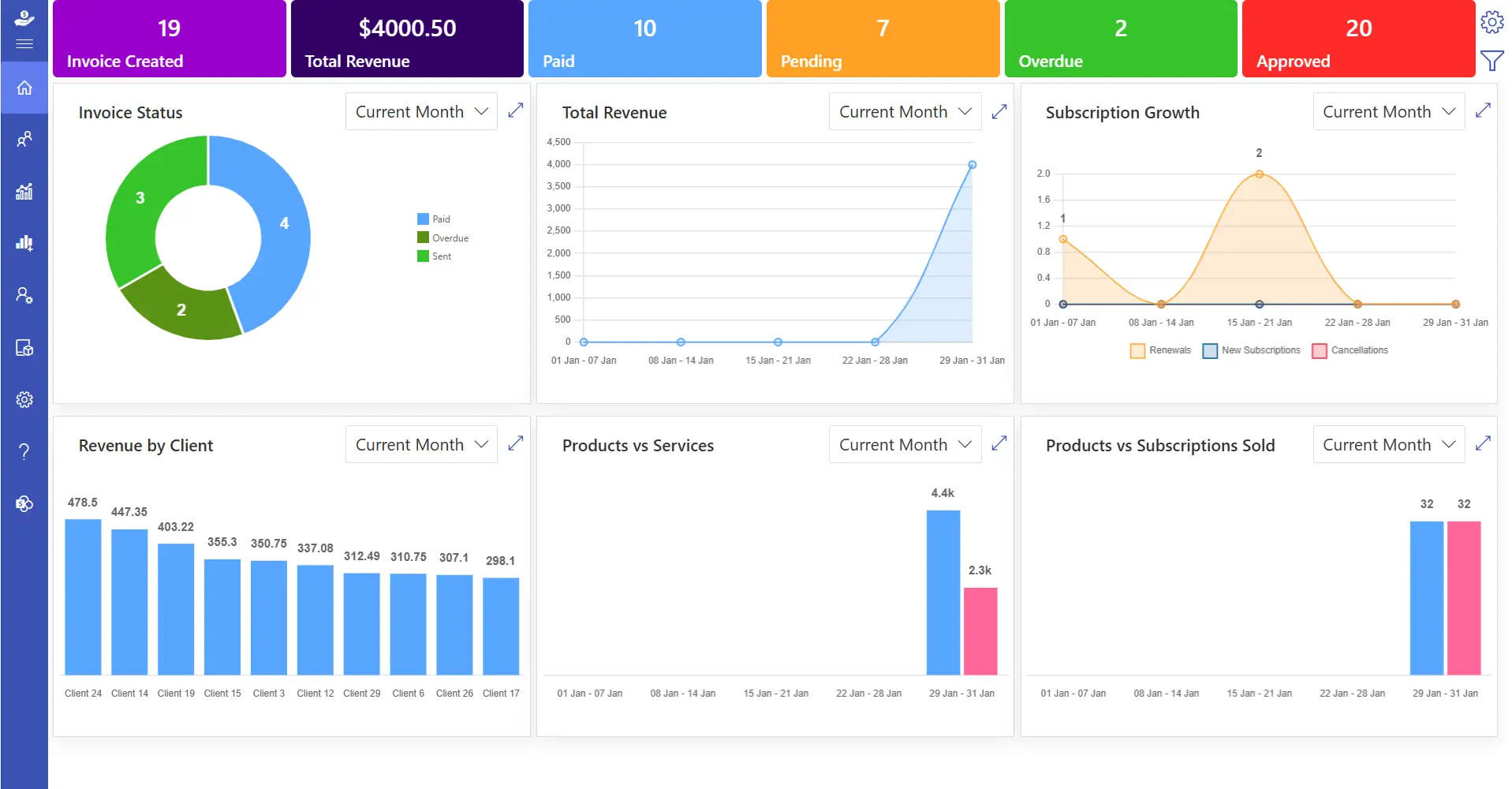
Revenue 365 is a powerful revenue management platform built for businesses that want full control over subscription and billing activities. It delivers clear financial insights for both finance and sales teams while automating recurring transactions.
Built within the Microsoft ecosystem, it offers strong security and compliance capabilities. Its integration with Microsoft 365 makes it a practical choice for organizations already using Microsoft tools. The platform helps businesses track, measure, and plan recurring revenue with clarity.
Key Features
- Automated billing cycles
- Real-time revenue tracking
- Custom billing configurations
- Flexible tax handling
- Custom invoice templates
- Quote generation tools
- Renewal management automation
- Advanced financial reporting
- Audit-ready records
- Revenue forecasting capabilities
Best known for: End-to-end subscription visibility and precise revenue tracking
2) Chargebee
Chargebee is a widely adopted subscription management solution used by fast-scaling SaaS and digital-first companies. It enables businesses to manage recurring billing while experimenting with pricing models and expanding globally. It supports flexible subscription structures and helps businesses operate efficiently while maintaining accurate subscription billing operations.
Key Features
- Automated recurring billing
- Multi-currency capabilities
- Pricing experimentation tools
- Dunning management
- Trial and coupon flexibility
- Subscription lifecycle tracking
- Revenue analytics
- Tax and compliance support
Best known for: Flexible pricing models and global subscription handling
4) Zuora
Zuora is a leading enterprise-grade subscription billing platform built for organizations managing large and complex revenue models. It supports businesses across multiple industries beyond SaaS. It provides flexibility in monetization and helps enterprises adapt their subscription strategies at scale.
Key Features
- Enterprise subscription billing
- Flexible product catalog
- Usage-based pricing models
- Automated revenue tracking
- Global tax support
- Advanced analytics and forecasting
- Renewal and upgrade workflows
- Customer account hierarchy
Best known for: Enterprise-level subscription and monetization capabilities
5) DealHub
DealHub combines CPQ (Configure Price Quote), subscription billing, and revenue management into a single platform. It is designed for sales-focused teams that require fast quoting and clear revenue visibility. The tool helps organizations manage deals, pricing, and quotation in a unified workflow.
Key Features
- CPQ and quote generation
- Subscription billing tools
- Contract lifecycle management
- Renewal tracking
- Revenue tracking automation
- Pricing and discount controls
- Analytics dashboards
Best known for: CPQ-driven revenue workflows for sales teams
6) SubscriptionFlow
SubscriptionFlow offers flexible tools for managing subscription businesses, making it suitable for companies of all sizes. It supports various billing models while keeping revenue data easy to access and manage. It allows businesses to test and refine subscription strategies while maintaining clear reporting.
Key Features
- Recurring billing automation
- Flexible billing cycles
- Usage-based billing
- Customer self-service portal
- Renewal and upgrade tracking
- Reporting and analytics
- Automated notifications
- Tax management
Best known for: Flexible subscription models and customer-centric features
7) RevOps.io
RevOps.io is designed to align sales, finance, and operations teams around revenue processes. It provides strong control over pricing, approvals, and deal management The platform offers visibility into every stage of the revenue lifecycle, helping teams work with clarity.
Key Features
- Deal desk automation
- Contract approval workflows
- Revenue policy management
- Renewal tracking
- Pricing and discount governance
- Workflow automation
- Audit-ready logs
- Performance dashboards
Best known for: Strong revenue governance and cross-team alignment
8) Recurly
Recurly is a trusted recurring billing platform used by SaaS, digital media, and eCommerce businesses. It focuses on maximizing recurring revenue through advanced billing and retention features. Its tools support payment recovery and customer retention, helping businesses maintain steady income.
Key Features
- Automated recurring billing
- Advanced dunning management
- Revenue recovery tools
- Global payment integrations
- Flexible pricing options
- Subscription analytics
- Renewal and churn insights
- Fraud detection
Best known for: Revenue recovery and retention-focused features
9) Paddle
Paddle is an all-in-one platform built for SaaS companies managing global subscriptions. It handles billing, payments, tax, and compliance within a single system. It is especially useful for businesses expanding into international markets. It also reduces the need for multiple tools by bringing all revenue-related operations into one unified platform.
Key Features
- Subscription billing automation
- Global tax handling
- Multi-currency payments
- Compliance-ready invoicing
- Renewal and upgrade tracking
- International payment methods
- Revenue analytics
Best known for: Global SaaS billing and tax management
10) BillingPlatform
BillingPlatform is a highly configurable solution designed for enterprises with complex billing requirements. It supports various industries, including telecom and cloud services. The platform provides flexibility in pricing models and supports large-scale operations with detailed reporting tools.
Key Features
- Custom product catalog
- Automated revenue tracking
- Global tax and compliance support
- Renewal management
- Multiple pricing models
- Advanced analytics and reporting
- Customer account hierarchy
Best known for: Handling complex enterprise billing scenarios
Precise recognition helps maintain compliance with accounting standards and avoids mistakes that could result in financial misstatements.
Why Is Managing Subscription Revenue a Challenge?
Managing subscription revenue may appear straightforward consistent monthly payments and steady growth but in practice, it involves multiple moving parts. The complexity is even higher in the U.S., which represents 53% of all digital subscriptions, making it the largest and most competitive subscription market globally. Below are some key challenges businesses face:
1. Unpredictable Churn
Customer churn remains one of the most critical challenges for subscription businesses. Even a small percentage of cancellations can significantly impact monthly recurring revenue (MRR). Retaining customers often requires continuous engagement and value delivery, especially in a market filled with alternatives.
2. Complex Pricing Tiers
Handling multiple pricing plans, discounts, and promotional offers can quickly become difficult to manage. If pricing does not match customer expectations or perceived value, businesses may lose revenue opportunities or struggle to retain customers.
3. Difficulty in Forecasting Revenue
While subscription models suggest predictability, factors like seasonal demand, plan changes, and churn can impact revenue patterns. Businesses need clear visibility into financial trends to estimate future income and plan growth effectively.
4. Missed Upsell and Cross-Sell Opportunities
Without detailed insights into customer behavior and usage, businesses may overlook opportunities to offer upgrades or additional services. This can limit revenue potential and reduce the overall customer lifetime value.
5. Revenue Leakage
Revenue leakage occurs when businesses lose income due to missed billings, failed payments, or gaps in tracking subscription changes. Without proper monitoring, issues like unbilled usage, delayed renewals, or unsuccessful transactions can go unnoticed. Over time, this can impact overall revenue performance and limit business growth.
Key Features to Look for in Revenue Management Software
Selecting the right revenue management software is not just about processing payments it’s about choosing a platform that supports the entire subscription lifecycle. Below are the key features to evaluate in detail.
1) Automation
Automation takes care of recurring financial activities such as billing cycles, renewals, refunds, and payment collection.
Instead of depending on manual effort, the system runs these processes based on predefined schedules, helping avoid delays and keeping operations consistent.
This allows subscription cycles to continue smoothly, reduces administrative workload, and supports steady revenue collection.
2) Revenue Management
A strong recurring revenue management software does more than record payments. It tracks subscription events like upgrades, downgrades, and cancellations in real time and updates financial data accordingly.
Businesses gain a clear view of recurring income, spot growth opportunities, and estimate future revenue more accurately.
This visibility helps sales, finance, and operations teams work with aligned data from a single system.
3) Quotation Management
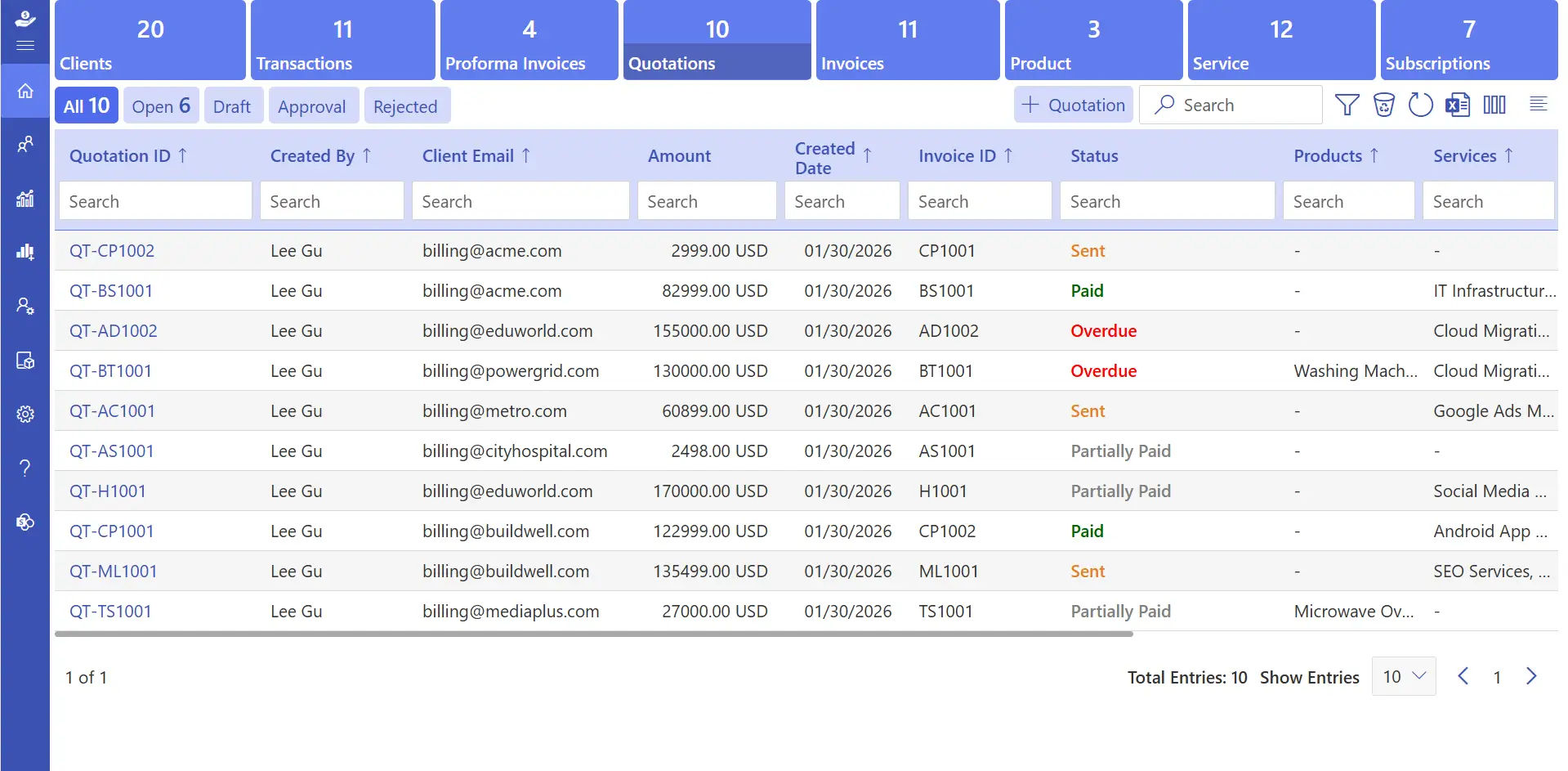
Quotation management software enables sales teams to create accurate quotes with correct pricing, terms, and discounts.
It improves pricing accuracy, provides clarity to customers, and supports a smooth transition from sales to billing.
For businesses with complex pricing structures or customized offerings, this feature adds significant value.
4) Analytics & Reporting
Analytics and reporting tools provide a clear view of subscription performance and financial health.
Businesses can monitor key metrics such as monthly recurring revenue, renewal rates, customer lifetime value, and churn impact.
Advanced reports allow segmentation by product, region, or customer type, helping teams make informed decisions based on real data.
5) Custom Billing & Invoice Process
The custom invoice feature supports a wide range of pricing models, including fixed subscriptions, usage-based charges, or hybrid structures.
Businesses can tailor invoices based on agreements, define billing cycles, and set specific terms for different customers.
This flexibility makes the software suitable for both growing startups and large enterprises with complex billing needs.
6) Invoice Templates
Invoice templates help maintain consistent branding while saving time.
Teams can use pre-built designs or customize layouts with logos, payment details, and terms.
This creates clear and professional invoices that are easy for customers to understand while reducing repetitive manual work.
7) Transaction Tracking
Transaction tracking provides a detailed record of all financial activities, including completed, pending, failed, and refunded payments.
Finance teams can quickly review transactions, identify issues, and manage account reconciliation effectively.
Revenue management software also gives customers access to their payment history, improving transparency and strengthening financial oversight for businesses.
8) Pro Forma Invoice
A pro forma invoice acts as an initial cost outline shared before issuing the final invoice. It gives customers a clear view of expected charges, especially for large or customized deals.
This approach helps set expectations early and supports smoother billing communication.
Revenue management software is also useful in international transactions where preliminary invoices are often required for compliance and documentation.
Best Practices to Manage Revenue for Business
Managing revenue effectively requires more than just tracking payments it involves building a structured approach that supports growth, improves visibility, and maximizes long-term value. Here are some essential best practices to consider:
- Monitor key metrics like MRR, ARR, churn rate, and customer lifetime value regularly
- Use automated billing to maintain consistent payment cycles and reduce manual effort
- Review and optimize pricing strategies based on customer value and market trends
- Focus on customer retention through engagement, support, and value delivery
- Identify upsell and cross-sell opportunities using customer behavior insights
- Maintain clear and accurate revenue tracking for better financial visibility
- Leverage analytics and reporting to make data-driven business decisions
- Plan revenue forecasting using historical data and growth patterns
Conclusion
In today’s subscription-driven economy, business growth is closely tied to how effectively recurring revenue is managed. The right revenue cycle software brings accuracy to billing, clear visibility into reporting, and strong control over renewals. It simplifies complex revenue operations into structured, measurable outcomes, allowing teams to focus more on growth and less on manual effort.
For organizations looking to manage revenue with clarity and efficiency, is built to support that goal.
Choose Revenue 365 today and turn recurring income into predictable growth.
Frequently Asked Questions
Why do companies use revenue management software?
Businesses use revenue management software to increase earnings, reduce manual involvement, and make informed pricing and sales decisions based on data.
Can revenue management software improve customer experience?
Yes. Revenue management software supports consistent pricing, better service availability, and tailored offers based on customer behavior. This leads to a more positive experience, stronger relationships, and improved customer satisfaction.
How does revenue management software help with profit growth?
Revenue management software helps businesses identify optimal pricing by analysing demand patterns and market trends. This allows companies to capture higher margins during peak demand and attract more customers.
Is revenue management software worth the cost for small businesses?
Yes. The additional revenue potential often offsets the cost of the software. Revenue management software also saves time, minimizes manual work, and helps small businesses improve how they manage and track their revenue.
Which revenue management software is best?
The ideal revenue management software depends on business needs, but here are some popular options:
- Revenue 365 – A strong choice for managing and optimizing overall revenue
- Chargebee – Well-suited for subscription-based companies
- Dealhub.io – Useful for handling sales pipelines and deal management
- RevOps.io – Designed to align sales, finance, and revenue operations
Each of these platforms offers valuable features that support business growth and operational efficiency.


_JiluXJRGNl.svg)























