

10 Best Subscription Billing Software: Complete Guide for 2026

Searching for the right subscription billing software? Managing recurring invoices, failed payment recovery, plan changes, and revenue tracking manually is time-consuming and error-prone. This guide walks through the 10 best platforms built to handle your entire billing lifecycle — so your team spends less time on operations and more time on growth.
- Subscription billing software automates recurring invoices, recovers failed payments, and gives you real-time visibility into MRR, ARR, and churn — all without manual effort.
- Revenue 365 is the top pick for most businesses in 2026, especially teams running on Microsoft 365 who want full billing automation without enterprise complexity.
- Different tools fit different needs — Chargebee for fast-growing SaaS, Paddle for global tax compliance, Togai for usage-based billing, and Stripe Billing for developer-first teams.
- Before picking a platform, evaluate your billing model, current tech stack, team size, and whether you need a Merchant of Record or just a billing engine.
What Is Subscription Billing Software?
Subscription billing software gives businesses a single place to handle recurring billing, plan changes, renewals, upgrades, and the full customer payment lifecycle automatically.
This includes:
- Charging customers on a defined schedule monthly, quarterly, or annually
- Generating and sending invoices without manual input
- Managing upgrades, downgrades, pauses, and cancellations
- Recovering failed payments with automated retry logic
- Tracking key revenue metrics like MRR, ARR, and churn rate
Rather than patching this together across spreadsheets and basic payment tools, the right subscription billing software runs all of it in the background. Cloud-based platforms take it further accessible from any device, anywhere, with no on-premise setup required.
Why Businesses Need Subscription Management Software
If you run a SaaS company, a membership platform, or any subscription-based business, here is what happens without a proper system in place.
Billing Becomes Reliable
A solid platform removes billing errors entirely. Customers are charged the right amount at the right time, every time. This builds trust and saves your team from chasing down mistakes or re-issuing corrected invoices after the fact.
Churn Drops with Smarter Payment Recovery
When a payment fails, automated retry logic kicks in and notifies the customer before the subscription lapses. You recover more revenue passively, without anyone on your team manually reviewing failed transactions or sending individual follow-ups
Revenue Becomes Easy to Measure
MRR, ARR, churn rate, and customer lifetime value are surfaced in clean dashboards rather than calculated manually in spreadsheets. You can see what is growing, what is slipping, and where to focus — at a glance, not after a reporting exercise.
Scaling Stops Being a Problem
Manual subscription management breaks as your customer base grows. Automated systems handle 100 customers and 10,000 customers the same way. Growth no longer creates operational pressure on your team.
Tax and Compliance Get Simpler
Selling across regions means navigating different tax rules. A strong platform handles tax calculation automatically, keeps your records organized, and reduces the risk of errors or penalties when you expand into new markets.
The Customer Experience Improves
Customers receive timely invoices, clear billing details, and flexible self-service options. Fewer billing surprises means fewer cancellation conversations. A clean payment experience is one of the most overlooked retention levers in any subscription business.
Automate your recurring billing with Revenue 365’s subscription billing software built inside your existing Microsoft 365 environment. No new logins, no migration headaches.
Top 10 Subscription Billing Software (2026)
Product | Key Integrations | Free Trial |
Revenue 365 | SharePoint, MS Teams, Outlook, Power BI, Power Automate | ✅ |
Chargebee | Stripe, PayPal, Xero, HubSpot, Salesforce | ✅ |
Maxio | QuickBooks, HubSpot, Salesforce, Stripe | ✅ |
Recurly | PayPal, Stripe, QuickBooks, Xero, Avalara | ✅ |
Paddle | Stripe, Slack, Intercom, Baremetrics | ✅ |
Zoho | Zoho CRM, PayPal, Stripe, Zoho Books | ✅ |
Zuora | Salesforce, HubSpot, SAP, Workday | Customized |
Togai | Stripe, Amazon S3, AWS, QuickBooks, Docusign | ✅ |
Stripe Billing | Salesforce, QuickBooks, Xero, Slack, Zapier | ✅ |
FastSpring | Salesforce, Mailchimp, Google Analytics, Zapier | Customized |
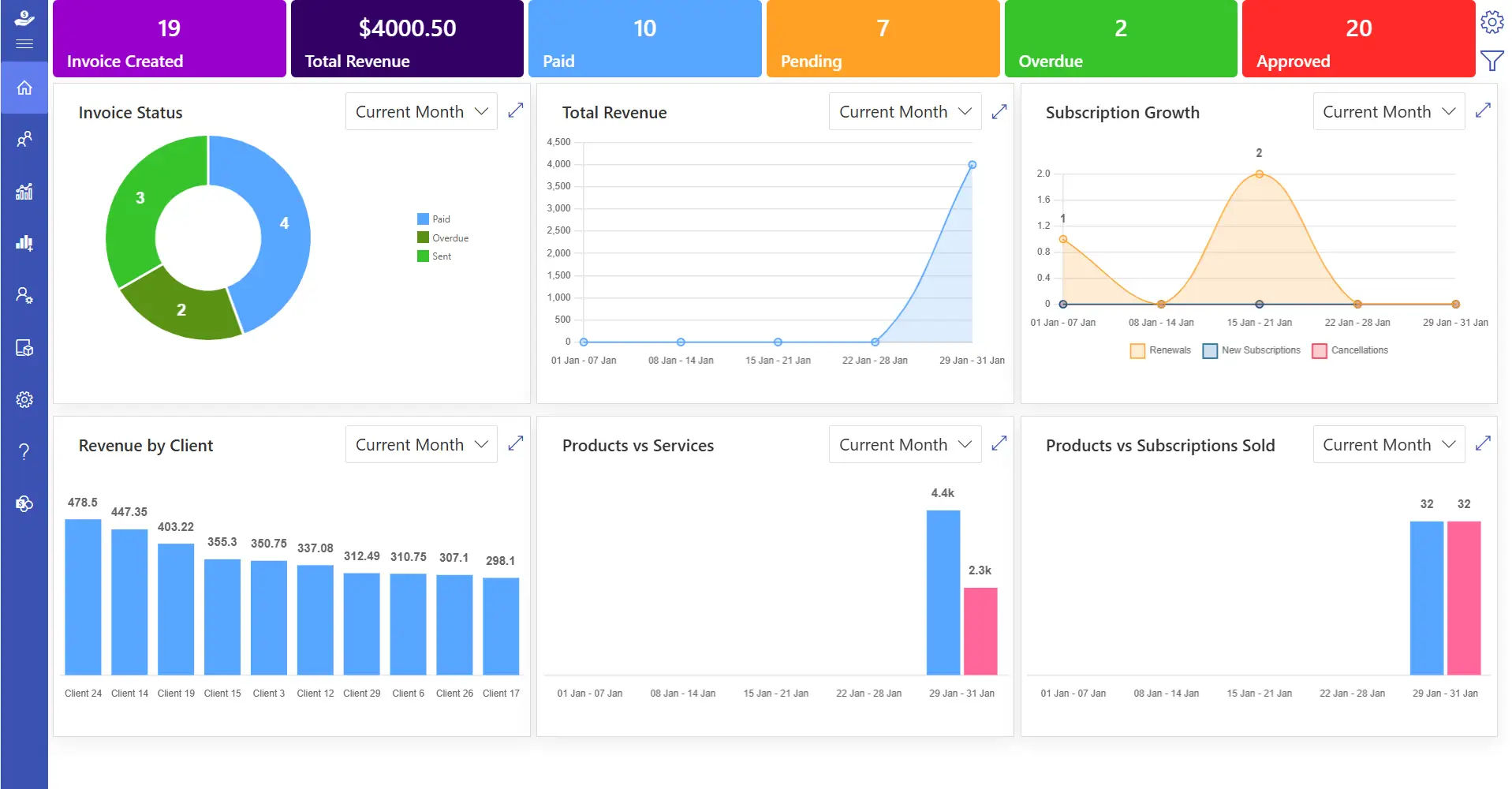
Revenue 365 is designed from the ground up for businesses that run on recurring revenue. It takes care of the entire billing journey from the first customer setup through plan changes, renewal cycles, failed payment recovery, and cancellations without needing a technical team to keep it running. Because it lives inside SharePoint and connects natively with Teams, Outlook, and Power BI, it fits directly into organizations already working inside Microsoft infrastructure, with no extra logins, disconnected tools, or migration effort required.
What sets Revenue 365 apart is how little it asks of your team to get real value. Billing, renewals, and approval workflows run on autopilot, so your finance and revenue teams spend their time growing the business instead of chasing down invoices. It brings enterprise-grade security to teams of every size, wrapped in an interface that non-technical staff can pick up in a single session.
Key Features:
- Real-time alerts for invoice activity, incoming payments, and customer-triggered billing events
- Tax configurations that adapt to your regional requirements and business structure
- Custom data fields for customers, users, and projects that reflect how your team actually works
- Invoice numbering with custom prefixes and suffixes for clean, branded documentation
- Bundled plan support with add-on options that open upsell and cross-sell opportunities
Benefits:
- Get billing running inside your existing Microsoft 365 environment in under 10 minutes, with no new logins to manage
- Cut manual billing work with automated recurring charges, retry logic, and failure handling
- Give finance and revenue teams one centralized dashboard instead of switching between disconnected tools
- Reduce onboarding time with an interface non-technical staff can use from day one
- Scale from a small team to enterprise volume without a platform migration
See Revenue 365 in Action
Run recurring billing inside Microsoft 365 with Revenue 365’s subscription billing software — no new tools, no extra overhead.
Chargebee is one of the most widely used subscription billing platforms on the market, known for handling complex billing models across the full range of subscription operations. It is built for teams moving at pace multi-currency billing, ASC 606-compliant revenue recognition, and detailed analytics all come ready to use without additional configuration.
Key Features:
- Flat-rate, usage-based, tiered, and hybrid billing models supported within a single account
- Revenue recognition built to ASC 606 standards for finance teams and audit readiness
- Automated dunning with configurable retry logic and customer payment notifications
Benefits:
- Support several billing models at once without needing a second tool as pricing gets more complex
- Stay audit-ready with revenue recognition built into the platform, not bolted on
- Recover more failed payments automatically through configurable dunning sequences
Maxio came together through the merger of SaaSOptics and Chargify, producing a platform that sits at the crossroads of billing and financial operations. Finance teams that handle audit-ready revenue reports, complex B2B contracts, or detailed SaaS metrics for investor decks will find Maxio built specifically for those demands.
Key Features:
- SaaS metrics including MRR, ARR, churn, LTV, and expansion revenue updated in real time
- Revenue recognition meeting ASC 606 and GAAP standards for finance and audit requirements
- Contract and subscription lifecycle management for multi-year and amendment-heavy agreements
Benefits:
- Walk into investor and board meetings with SaaS metrics that are already accurate and current
- Handle milestone invoicing and contract amendments without manual finance workarounds
- Cut collections workload with automated accounts receivable workflows
Pass audits faster with revenue recognition built to GAAP and ASC 606 standards
- Keep billing and finance data in one system instead of reconciling two tools
Best For: B2B SaaS businesses that need financial reporting tightly connected to billing operations.
Free Trial: ✅ Yes
Recurly has earned its reputation through one core strength: keeping revenue from walking out the door through failed payments. Its dunning engine retries failed transactions automatically, sends customer notifications at the right moment, and adjusts retry timing based on real payment failure patterns.
Key Features:
- Intelligent dunning with automated retry flows and customer-facing payment notifications
- Multiple payment gateway support within a single account
- Multi-currency and multi-language capabilities for international subscriber bases
Benefits:
- Recover more revenue from failed payments without manual follow-up from your team
- Serve international subscribers confidently with built-in multi-currency and multi-language support
- Avoid vendor lock-in with support for multiple payment gateways in one account
Best For: Subscription businesses of any size where payment recovery and involuntary churn are the primary focus.
Free Trial: ✅ Yes
5. Paddle
Paddle takes a different approach to subscription billing. Rather than acting as a payment processor, it operates as a Merchant of Record — taking on full legal and financial responsibility for your transactions, including tax collection, compliance, and regulatory obligations across every market you sell in.
Key Features:
- Merchant of Record coverage for taxes, compliance, chargebacks, and market regulations
- Support for 200+ countries with automatic local tax calculation and currency conversion
- Checkout, subscription billing, and lifecycle management in one connected system
Benefits:
- Expand into new countries without hiring local tax or compliance counsel
- Reduce chargeback and fraud risk, since Paddle carries that liability as Merchant of Record
- Simplify your stack with checkout, billing, and lifecycle management in one system
Zoho Subscriptions works naturally inside the broader Zoho ecosystem CRM, Books, Desk sharing data cleanly across products without manual syncing. For small businesses and early-stage startups that need dependable recurring billing without a large software budget, it delivers the core functionality at a price point that makes sense from day one.
Key Features:
- Recurring billing and invoicing automation with configurable payment schedules
- Dunning management with automated email sequences for failed and expiring payments
- Customer self-service portal for plan changes, payment updates, and invoice downloads
Benefits:
- Get recurring billing running without a large software budget or long onboarding
- Keep billing, CRM, and accounting data in sync automatically if you already use Zoho tools
- Cut support tickets with a self-service portal customers can use for plan and payment changes
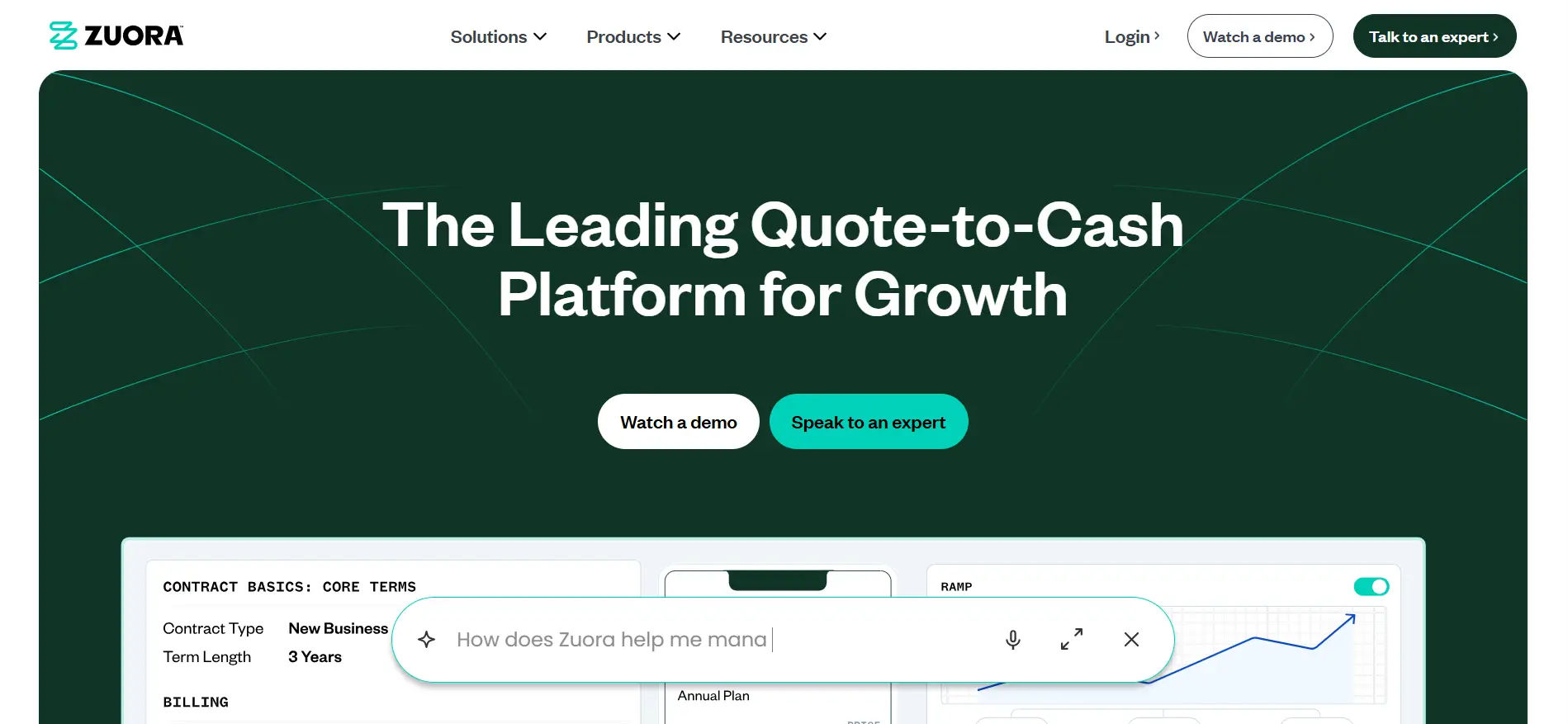
Zuora helped build the subscription billing category and remains one of the deepest platforms available for large enterprises with genuinely complex needs. Multi-entity structures, global billing operations, strict revenue recognition requirements, and high transaction volumes are where Zuora outperforms lighter tools by a significant margin.
Key Features:
- Enterprise billing designed for multi-entity and global operational structures
- Revenue recognition compliant with ASC 606 and IFRS 15 accounting standards
- Multi-currency, multi-language, and multi-entity support within one deployment
Benefits:
- Run billing across multiple entities and regions from a single deployment
- Meet strict global revenue recognition standards without custom-built reporting
- Handle high transaction volumes without the platform becoming a bottleneck
Best For: Large enterprises with global operations, multi-entity billing, and strict revenue recognition requirements.
Free Trial: Customized
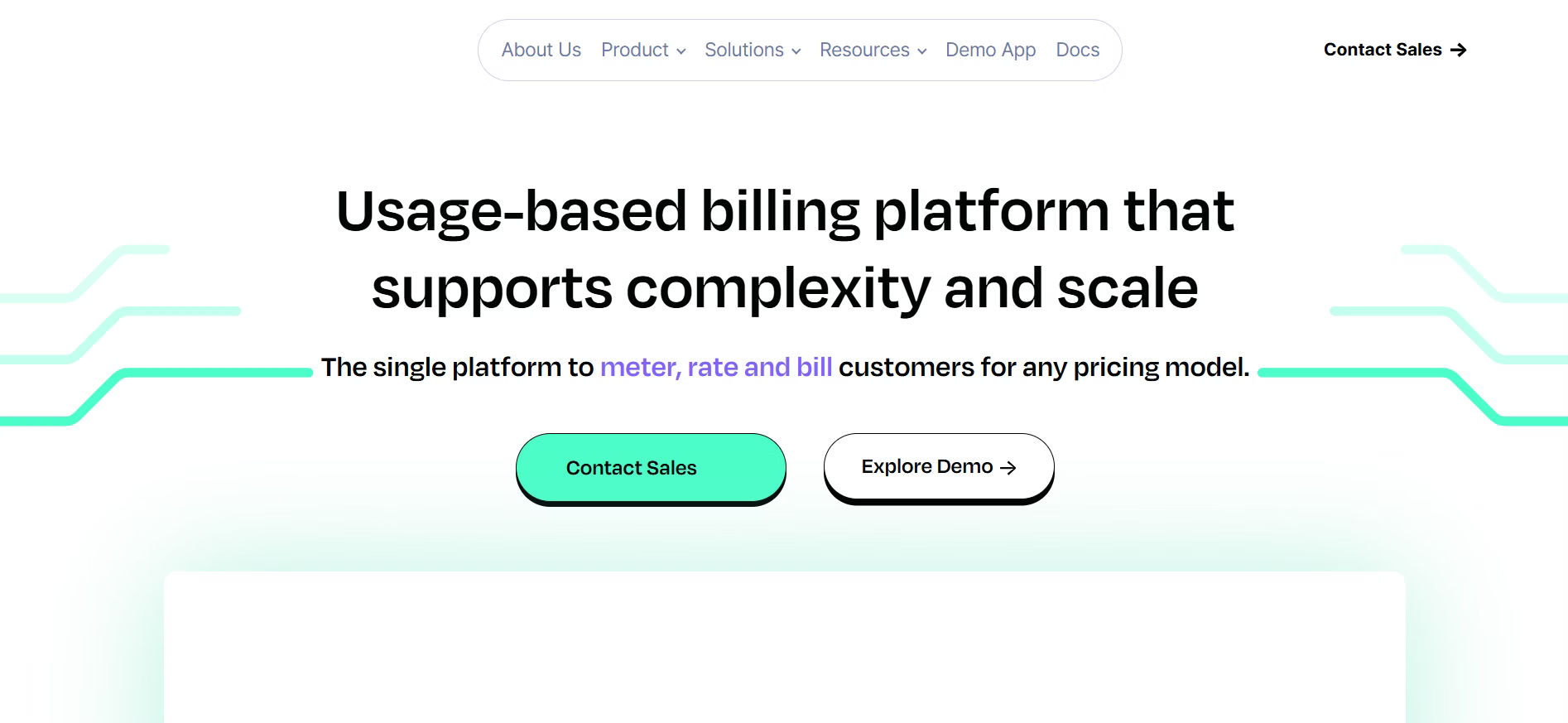
Togai is built for businesses that charge based on actual consumption rather than a fixed plan API calls, data processed, active users, or any custom usage metric. It pulls usage data in real time, applies your pricing rules, and produces accurate invoices without manual calculation involved.
Key Features:
- Real-time usage metering with flexible data ingestion from multiple sources
- Usage-based, tiered, and hybrid pricing model support within the same platform
- Billing automation driven by configurable usage thresholds and pricing rules
Benefits:
- Bill accurately for consumption-based products without building metering infrastructure yourself
- Test new pricing models in a sandbox before they touch live customer invoices
- Support negotiated enterprise pricing alongside standard usage-based plans
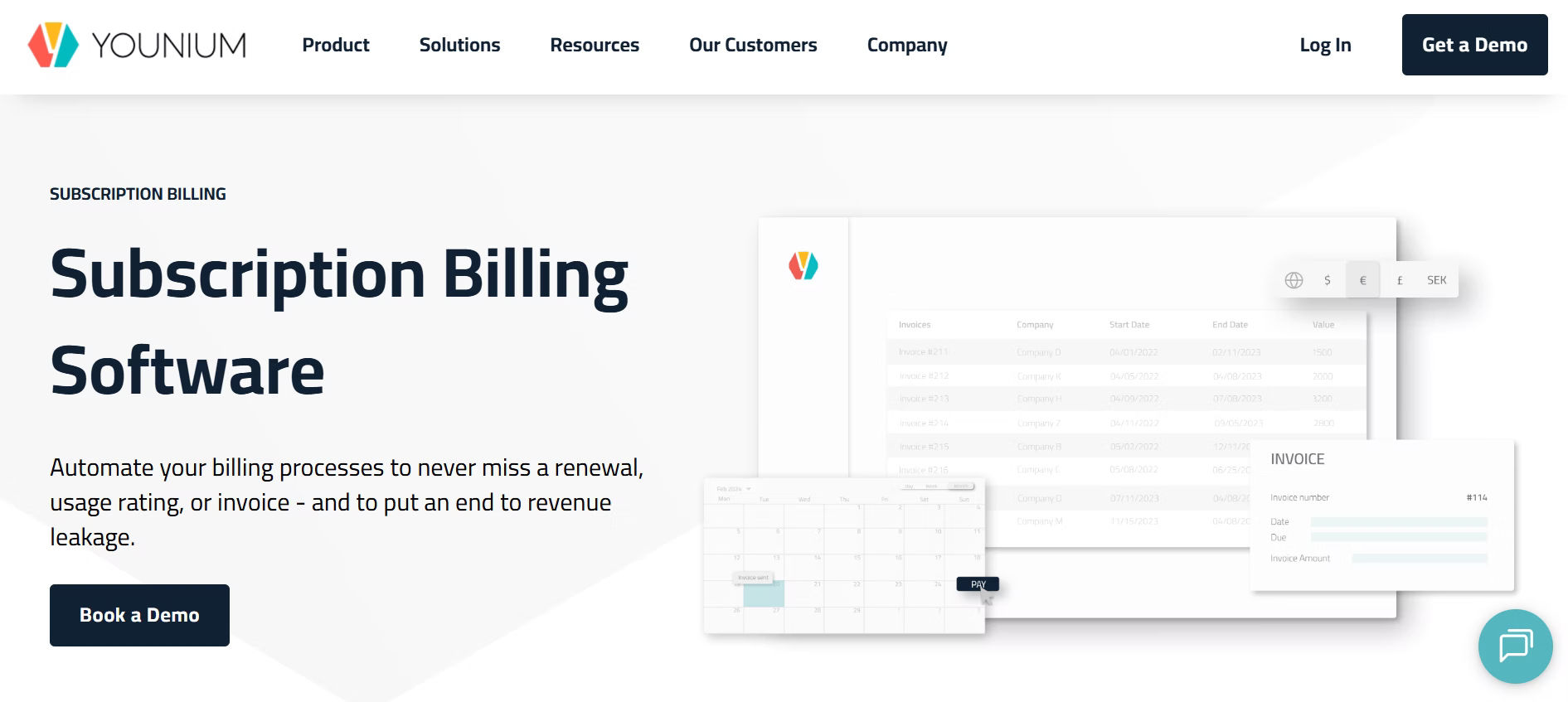
Younium is a subscription management platform built specifically for B2B companies that need to bridge the gap between their CRM, finance systems, and billing operations. It focuses on contract-based subscriptions, helping teams manage renewals, amendments, and revenue recognition without manual reconciliation between systems.
Key Features:
- Contract lifecycle management with automated renewal workflows and amendment tracking
- Revenue recognition aligned with ASC 606 for finance and audit readiness
- Bidirectional sync with HubSpot, Salesforce, Xero, and TaxJar
Benefits:
- Keep sales and finance working from the same subscription data instead of separate spreadsheets
- Cut manual reconciliation between your CRM and your billing system
- Track renewals and contract amendments without them slipping through the cracks
5 Key Features:
- Contract lifecycle management with automated renewal workflows and amendment tracking
- Revenue recognition aligned with ASC 606 for finance and audit readiness
- Bidirectional sync with HubSpot, Salesforce, Xero, and TaxJar
- Subscription analytics covering ARR, churn, and expansion revenue by segment
- Usage data collection for hybrid billing models that combine recurring and consumption charges
FastSpring operates as a Merchant of Record for SaaS and digital product companies selling internationally, taking on tax collection, compliance, and fraud prevention on the seller’s behalf. That coverage matters most for independent software vendors and digital product creators who don’t have an in-house team to manage global tax obligations.
Key Features:
- Merchant of Record coverage for global tax collection, compliance, and fraud prevention
- Branded checkout and subscription storefronts with localized language and currency support
- Full subscription lifecycle management including upgrades, downgrades, pauses, and cancellations
Benefits:
- Sell globally without registering for tax in every country you operate in
- Reduce fraud exposure since FastSpring carries Merchant of Record liability
- Launch localized checkout experiences without separate regional builds
How to Choose the Right Subscription Billing Software
With twelve strong options on the table, here is a practical framework to narrow down the right choice for your business. For more in-depth comparisons and product guides, visit the Apps 365 blog.
Match the Platform to Your Business Size
Small businesses and startups should prioritize platforms that are fast to set up and easy to run from day one Revenue 365 and Zoho Subscriptions are natural starting points with free trials and simple onboarding. Mid-size companies with growing billing complexity should look at Chargebee, Recurly, or Revenue 365, all built to scale without forcing a platform switch later. Large enterprises with global operations and multi-entity needs should evaluate Zuora or Maxio, keeping implementation time and resource requirements in mind.
Weigh the Platform Against Your Budget
Budget-conscious teams will find a free entry-level plan with Zoho Subscriptions and a free billing threshold tier with Chargebee. Revenue 365 and Recurly both offer trials before any financial commitment. Enterprise platforms like Zuora carry licensing and setup costs that only make sense once your operations reach significant scale.
Check Integration Needs Against Your Existing Stack
Map out your existing tools CRM, accounting software, payment gateways, support platforms — and match them against what each platform connects to natively. Revenue 365 is the obvious choice for Microsoft 365 environments. Stripe Billing is the natural fit for teams already processing payments on Stripe infrastructure.
Confirm the Platform Supports Your Billing Model
Flat-rate and tiered models have the broadest platform compatibility. Usage-based or metered billing narrows the field significantly Togai is the strongest specialist here, with Stripe Billing and Chargebee also capable for this model
Factor In Ease of Use for Your Team
Without a developer on your billing team, no-code setup and clean dashboards matter most. Revenue 365, Zoho Subscriptions, and Chargebee are all accessible for non-technical teams. Togai and Zuora require more technical involvement to extract full platform value.
Account for Global Compliance Needs
For businesses selling internationally with complex tax obligations, Paddle and FastSpring handle compliance entirely as Merchant of Record providers. Revenue 365 and Recurly offer tax integrations through Avalara and TaxJar for businesses that want compliance support without transferring full MoR responsibility.
Plan for Security and Long-Term Scalability
Revenue 365 is built to grow alongside your business within Microsoft-backed infrastructure, including SOC 2 compliance and Azure security standards, without requiring a platform migration as your operations expand
Conclusion
The subscription billing software market in 2026 offers a strong option for every type of business, from early-stage startups finding their footing to global enterprises managing complex multi-entity operations. The right platform comes down to your billing model, team structure, integration requirements, and where your business is heading.
For most businesses, Revenue 365 is the most practical place to start. It handles the full subscription billing lifecycle, runs natively inside Microsoft 365, needs no technical setup team, and comes with a free trial before any commitment. For consumption-based pricing, Togai is the clear specialist. For global tax compliance without the overhead, Paddle or FastSpring takes that problem off your plate entirely. For enterprise-scale complexity, Zuora delivers the depth required
You have done the research. Now see it live.
Revenue 365 checks every box in this framework — and it works inside the tools your team already uses every day.
Frequently Asked Questions
Revenue 365 is the strongest choice for most businesses in 2026. It handles automated billing, payment recovery, revenue reporting, and the full customer lifecycle in one platform — with no technical team required to get it running.
It takes over recurring invoicing, manages subscriber plans, recovers failed payments, and tracks revenue metrics like MRR and churn automatically. The result is a billing operation that runs in the background while your team focuses on growth.
Yes. Zoho Subscriptions offers a free plan for up to 20 customers. Chargebee provides a free tier up to $250K in cumulative billing. Revenue 365 and Recurly both offer free trials before requiring any payment commitment.
Basic billing tools handle invoices and collect payments. Subscription billing software goes further — covering plan changes, cancellations, automated payment recovery, customer self-service portals, and built-in revenue analytics across the full subscriber lifecycle.
Yes. Revenue 365 is built to be accessible and affordable for small teams. There is no need for a developer, a large budget, or a lengthy implementation process to get started.
Revenue 365 is purpose-built for Microsoft 365. It connects natively with Teams, SharePoint, Outlook, and Power BI — giving your team full billing visibility without leaving the tools they already use every day.


_JiluXJRGNl.svg)























